
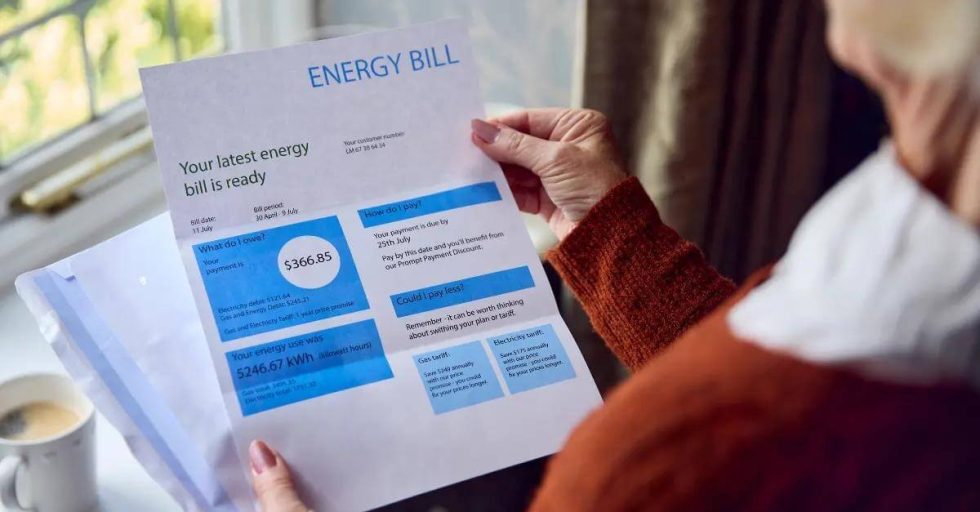
Your PG&E bill dropped this January – electric rates are down 5%, and gas rates fell 3%. That’s the fourth electric rate decrease in two years.
But here’s what throws Bay Area homeowners: despite California’s notoriously high electricity costs, heat pumps often cost less to run than gas furnaces. I know that sounds backwards when PG&E electricity rates still hover around $0.30-0.35 per kWh.
The difference comes down to efficiency. Your gas furnace converts roughly 80-95% of fuel into heat – the rest escapes through the flue. A modern heat pump moves 2.5 to 3.5 units of heat for every unit of electricity consumed. That’s 250-350% efficiency, and it’s why the math flips despite higher electricity rates.
This comparison walks you through actual 2026 PG&E rates, real Bay Area installation examples, and the new Base Services Charge launching in March. Whether you’re replacing a 15-year-old system or planning ahead, you’ll see exactly what each option costs to install and operate in Santa Cruz, San Jose, Marin, and surrounding counties.
Understanding 2026 PG&E Rates: The Numbers That Matter for Heating Costs
PG&E’s rate structure shifted significantly between 2024 and 2026. Electric rates dropped 11% from January 2024 levels – about $20 less per month for typical residential customers. On January 1, 2026, residential electric rates decreased another 5%, bringing bills down approximately $7 monthly for customers who use 500 kWh.
Natural gas rates also decreased by 3% on January 1, 2026, with February seeing the procurement rate plummet to $0.412 per therm – a 35.5% drop from January’s $0.638 per therm. For typical residential customers using 31 therms monthly, that translates to roughly $7 in monthly savings.
But March 2026 brings the Base Services Charge – a restructuring that affects every PG&E electric customer.
The Base Services Charge Explained
Starting March 2026, PG&E separates infrastructure and maintenance costs from your electricity usage charges. You’ll see a new line item called the Base Services Charge on your bill:
- Standard residential customers: ~$24/month fixed charge
- CARE program participants: ~$6/month fixed charge (plus 35% off electricity usage)
- FERA program participants: ~$12/month fixed charge (plus 18% off electricity usage)
The tradeoff? Your per-kWh electricity rate drops by an estimated $0.05-0.07. Higher electricity users benefit more from the lower per-kWh rate. Lower users feel the fixed charge more prominently.
For heat pump owners in moderate Bay Area climates, this rate structure can work in your favor – especially if you’re already running higher electricity usage for an all-electric home.
Electric Heat vs Gas Heat: Breaking Down Real Costs for Bay Area Homes
Let’s compare what it actually costs to heat a typical 1,500-2,000 square foot Bay Area home with current 2026 rates.
Gas Furnace Heating Costs (2026 PG&E Rates)
A gas furnace with 95% AFUE efficiency heating your home at February 2026 procurement rates:
- Natural gas rate: $0.412/therm (procurement) + delivery charges (typically $0.50-0.70/therm total)
- Typical winter usage: 50-80 therms/month for moderate Bay Area climate
- Monthly heating cost: $50-80 in mild months, $100-140 during coldest periods
- Annual heating estimate: $540-900 depending on home size and insulation
Add monthly gas service charges (minimum $10-15) whether you use gas or not, plus you still need a separate air conditioning system for summer cooling.
Heat Pump Heating Costs (2026 PG&E Rates)
A modern heat pump with 10 HSPF (Heating Seasonal Performance Factor) at current electric rates:
- Electricity rate: ~$0.30-0.35/kWh average (lower after March Base Services Charge for usage)
- Typical winter usage: 600-1,000 kWh/month for heating (Bay Area moderate climate)
- Monthly heating cost: $180-350 depending on usage and rate tier
- Annual heating estimate: $900-1,500
But here’s what changes the equation: heat pumps also cool your home in summer. No separate AC system needed.
Why Heat Pumps Can Cost Less Despite Higher Electricity Rates
Heat pump efficiency in Bay Area’s moderate climate (rarely below 35°F) means they maintain 300-400% efficiency most of the year. Your gas furnace tops out at 95-98% efficiency – and that’s only for high-efficiency models.
For every dollar of gas energy, you get 80-95 cents of actual heat. The rest escapes through combustion byproducts and flue losses.
For every dollar of electricity a heat pump uses, you get $2.50-3.50 worth of heat because the system moves existing heat rather than generating it.
That efficiency advantage often overcomes the higher per-kWh electricity cost – especially when you factor in:
- No separate cooling system installation or operation costs
- No monthly gas service fees ($15-20/month adds $180-240 annually)
- Better performance in Bay Area’s mild winters compared to extreme climates
- Potential solar panel offset (if installed)
| System Type | Upfront Cost | Annual Heating | Annual Cooling | Service Fees | Total Annual Operating |
|---|---|---|---|---|---|
| Gas Furnace + AC | $7,000-12,000 | $540-900 | $300-500 | $180-240 (gas) | $1,020-1,640 |
| Heat Pump | $10,000-18,000 (After $2,000 tax credit: $8,000-16,000) | $900-1,500 | Included | $0 (no gas) | $900-1,500 |
Many Bay Area homeowners see $300-800 in annual savings with heat pumps once you factor in eliminated gas service fees and combined heating/cooling in one efficient system.
Heat Pump vs Gas Furnace: Installation and Long-Term Value in Bay Area
Installation costs tell only part of the story. Let’s look at what Bay Area contractors actually charge and what you’re getting for that investment.
Installation Cost Breakdown
Gas Furnace + Central AC System:
- Equipment: $3,500-6,000 (mid-efficiency furnace 80-95% AFUE + 14-16 SEER AC)
- Labor: $2,500-5,000 (includes gas line work, venting, ductwork modifications)
- Permits: $300-800
- Total: $7,000-12,000 installed
Heat Pump System:
- Equipment: $5,000-10,000 (16-20 SEER, 9-11 HSPF cold-climate model)
- Labor: $3,000-6,000 (electrical work, refrigerant lines, ductwork)
- Electrical panel upgrade: $0-3,000 (if needed – some homes require 200-amp service)
- Permits: $300-800
- Total before incentives: $10,000-18,000
- After federal tax credit ($2,000): $8,000-16,000
TECH Clean California and Rebate Status for 2026
Here’s the challenging news for 2026: TECH Clean California incentives are fully reserved statewide as of November 2025. Central and Southern California HEEHRA rebates (income-qualified) became fully reserved January 7, 2026, with Northern California expected to follow by February 2026.
What this means:
- Standard TECH incentives ($1,100-4,300 for heat pumps): Not currently accepting new reservations
- HEEHRA rebates (income-qualified, up to $8,000): Waitlist only in Central/Southern California
- Federal 25C tax credit ($2,000 for heat pumps): Still available through 2026
- Some local utility rebates: Check with your specific utility (availability varies)
Even without state rebates, the federal tax credit and long-term operating cost savings often make heat pumps competitive with gas systems over their 15-20 year lifespan.
Bay Area Climate Advantage for Heat Pumps
Bay Area’s moderate temperatures create ideal conditions for heat pump efficiency:
- Coastal areas (San Francisco, Half Moon Bay, Santa Cruz): Rarely below 40°F or above 85°F – heat pumps maintain peak 300-400% efficiency year-round
- Peninsula and South Bay (San Mateo, Palo Alto, San Jose, Santa Clara): Mild winters (35-45°F lows) and warm summers (85-95°F) – heat pumps excel in this range
- East Bay (Oakland, Berkeley, Walnut Creek, Concord): Slightly wider temperature swings but still well within modern cold-climate heat pump capabilities
- North Bay (Marin, Sonoma, Napa): Similar to East Bay – occasional colder snaps but modern heat pumps handle it efficiently
Modern cold-climate heat pumps maintain efficiency down to 5°F and continue operating to -15°F or lower. Bay Area temperatures rarely approach those extremes, meaning you’re operating in the heat pump’s optimal efficiency zone most of the year.
Pros and Cons: Making the Right Choice for Your Bay Area Home
Gas Furnace + AC System Advantages
- Lower upfront cost: $7,000-12,000 vs $10,000-18,000 for heat pumps
- Familiar technology: HVAC contractors have decades of installation experience
- Reliable in all temperatures: Gas furnaces provide consistent heat regardless of outdoor temperature
- Fast heating: Gas furnaces deliver 120-140°F air for quick warm-up
- No electrical panel upgrades: Most homes already have adequate electrical service
Gas Furnace + AC System Disadvantages
- Higher operating costs: Gas service fees ($180-240/year) plus combined gas and electric bills
- Two systems to maintain: Furnace and AC require separate service, repairs, and eventual replacement
- Indoor air quality concerns: Combustion byproducts require proper venting; potential CO exposure if system malfunctions
- Fossil fuel dependency: Subject to natural gas price volatility and future infrastructure costs
- California’s electrification push: State bans new gas furnace/water heater sales starting 2030; current systems grandfathered but replacement becomes trickier
Heat Pump System Advantages
- One system for heating and cooling: Eliminates need for separate AC, simplifies maintenance
- Lower annual operating costs: Typical Bay Area savings of $300-800/year when factoring eliminated gas fees
- 2-3x more efficient: Heat pumps move heat rather than generate it – 250-350% efficiency vs gas furnace 80-95%
- No combustion byproducts: Better indoor air quality, no CO risk, no flue losses
- Future-proof: Aligns with California’s 2030 gas appliance sales ban and carbon-neutral 2045 goal
- Solar-compatible: If you add solar panels, electricity cost approaches zero
- Federal tax credit: $2,000 credit still available through 2026
- Resale value: Increasingly attractive to Bay Area homebuyers as electrification awareness grows
Heat Pump System Disadvantages
- Higher upfront investment: $10,000-18,000 before incentives (though $8,000-16,000 after federal tax credit)
- Potential electrical upgrades: Some homes need 200-amp service panel ($3,000-5,000 additional)
- Cooler air temperature: Heat pumps deliver 90-110°F air vs gas furnace 120-140°F (still adequately heats but feels different)
- Efficiency drops in extreme cold: Not an issue in Bay Area’s moderate climate but worth noting for extreme weather events
- Rebate availability: TECH Clean California incentives currently fully reserved (federal $2,000 tax credit still available)
4 Key Factors for Bay Area Homeowners Choosing Between Electric and Gas Heat
1. Your Home’s Current Systems and Infrastructure
Existing gas line and furnace? Gas replacement costs less upfront. But if you’re adding AC anyway, the combined furnace + AC cost approaches heat pump installed cost – especially after the $2,000 federal credit.
No existing gas line? Running new gas service adds $3,000-8,000 to installation. Heat pumps become clearly more economical.
100-amp electrical panel? Heat pumps often require panel upgrades to 200 amps. Factor $3,000-5,000 for this work, though the federal HEEHRA rebate (if available when reservations reopen) can cover up to $4,000 of electrical upgrades.
2. How Long You’re Staying in Your Home
Planning to stay 10+ years? Heat pump savings accumulate. Total savings over 15 years often reach $12,000-18,000 when you account for:
- Annual operating cost difference ($300-800/year)
- Eliminated gas service fees ($180-240/year)
- Single system vs two separate systems (fewer repair/replacement cycles)
Selling within 3-5 years? Your payback period extends, though Bay Area buyers increasingly value all-electric homes with heat pumps. Many local real estate agents report heat pumps as a selling point, particularly in environmentally conscious markets like Berkeley, Palo Alto, and San Francisco.
3. Your Utility Rate Plan and Usage Patterns
PG&E’s March 2026 Base Services Charge changes the math. The $24/month fixed fee hurts low-usage households but benefits higher users through reduced per-kWh rates.
If you’re already running 800+ kWh monthly (typical for all-electric homes), the lower per-kWh rate after March 2026 makes heat pumps more economical. Lower usage households (400-600 kWh/month) see less benefit from the kWh reduction and feel the fixed charge more prominently.
Time-of-use rates matter too. Heat pumps paired with programmable thermostats can shift heating loads to off-peak periods (9 PM – 4 PM on PG&E’s E-TOU-C plan), maximizing savings on the lower per-kWh rate.
4. Your Environmental and Long-Term Planning Goals
California’s clean energy grid (60%+ renewable as of 2026) means heat pumps produce 50-70% less CO2 than gas furnaces. Add solar panels and your heating emissions approach zero.
Gas furnaces produce 3-5 tons of CO2 annually for typical Bay Area homes – equivalent to driving 7,000-11,000 miles.
California’s 2030 ban on new gas furnace and water heater sales doesn’t affect existing systems, but it signals where the state is headed. Installing a gas furnace in 2026 means navigating a shrinking gas infrastructure when replacement time comes in 2041-2046.
5 Ways to Save Money on Heating Costs Regardless of System Type
1. Optimize Your Thermostat Settings
Lowering your thermostat 1°F saves 1-3% on heating bills. Set to 68°F when home and awake, 55-58°F when sleeping or away. Programmable or smart thermostats (Ecobee, Nest, Honeywell) automate this schedule and often pay for themselves within one heating season.
2. Seal Air Leaks and Improve Insulation
Bay Area homes built before 2000 often lack adequate insulation. Adding attic insulation (R-38 to R-49) costs $1,500-3,000 but can reduce heating costs 15-25%. Sealing air leaks around windows, doors, and penetrations (electrical, plumbing) costs $200-500 in weatherstripping and caulk but delivers immediate returns.
BayREN (Bay Area Regional Energy Network) offers free home energy assessments and rebates up to $3,000 for insulation and air sealing projects. Check bayren.org for current programs.
3. Maintain Your System Regularly
Annual HVAC maintenance ($150-250) extends equipment life and maintains peak efficiency. Clean or replace filters monthly during heating season – dirty filters force systems to work harder, increasing energy use 5-15%.
Heat pumps benefit from seasonal checkups in both spring and fall since they operate year-round. Gas furnaces need annual safety inspections to check for cracked heat exchangers, proper venting, and carbon monoxide risks.
4. Take Advantage of Income-Qualified Programs
If your household income qualifies (varies by household size), these PG&E programs significantly reduce costs:
- CARE (California Alternate Rates for Energy): 20%+ discount on gas, 35% average discount on electricity
- FERA (Family Electric Rate Assistance): 18% discount on electricity for households of 3+ people
- ESA (Energy Savings Assistance): Free weatherization, insulation, and energy-efficient appliances
- REACH (Relief for Energy Assistance through Community Help): Up to $800 bill credit for past-due bills
CARE customers pay only $6/month Base Services Charge starting March 2026 (vs $24 for standard customers), making electricity significantly more affordable.
5. Consider Whole-Home Electrification with Solar
Heat pumps paired with solar panels create the most economical long-term heating solution. Solar offsets most electricity costs, and heat pumps consume that clean electricity at 250-350% efficiency.
Federal Investment Tax Credit (ITC) covers 30% of solar installation costs through 2032. Combined with the $2,000 heat pump credit, the upfront investment drops significantly. Bay Area homeowners with solar + heat pumps often see near-zero energy bills – paying only PG&E’s connection charges.
Electric vs Gas Heat Cost: Making Your Decision
The “cheaper” heating system depends entirely on your situation. Gas furnaces cost less upfront ($7,000-12,000 vs $10,000-18,000 for heat pumps before incentives). Heat pumps often cost less annually ($300-800 savings when factoring eliminated gas fees and combined heating/cooling).
For Bay Area homeowners specifically:
- Choose gas if: You need lowest upfront cost, your existing furnace is under 10 years old, you’re moving within 5 years, or electrical panel upgrades push heat pump costs too high
- Choose heat pump if: You’re replacing both heating and cooling, staying 7+ years, value environmental impact, want to eliminate gas service fees, or plan to add solar panels
- Consider dual-fuel if: You want heat pump efficiency most of the year with gas backup for rare cold snaps – costs $2,000-4,000 more but provides maximum reliability and efficiency
Bay Area’s moderate climate gives heat pumps a significant advantage over colder regions. You’re operating in the heat pump’s optimal efficiency zone 90%+ of the year, maximizing the efficiency advantage that makes electricity cost-competitive with natural gas despite higher per-kWh rates.
The 2026 PG&E rate decreases and March Base Services Charge restructuring improve the economics for both systems, but heat pumps benefit slightly more from the lower per-kWh usage rates – especially for households already running higher electricity consumption.
Professional HVAC Guidance for Bay Area Homeowners
Making heating system decisions involves more than comparing costs and efficiency ratings. Your home’s specific characteristics – ductwork condition, insulation levels, electrical capacity, and existing infrastructure – significantly impact which system performs best and what installation actually costs.
Bellows Plumbing, Heating, Cooling & Electrical serves Santa Cruz, San Jose, Marin, San Francisco, Sonoma, and Santa Clara counties with comprehensive HVAC system assessments. Our team evaluates your home’s heating and cooling needs, explains actual installation costs for your specific situation, and helps you understand real operating cost projections based on your usage patterns and PG&E rate plan.
We install both high-efficiency gas furnaces and modern heat pump systems, so our recommendations focus on what works best for your home and budget – not pushing one technology over another. Whether you’re replacing a failing furnace, adding air conditioning, or planning whole-home electrification, we provide honest assessments and transparent pricing.
Schedule your consultation to discuss:
- Your home’s electrical capacity and any necessary upgrades
- Ductwork modifications or sealing to optimize efficiency
- Federal tax credit qualification and application process
- Right-sized equipment selection (oversized and undersized systems both waste energy)
- Financing options for system replacement or upgrades
Contact Bellows Plumbing, Heating, Cooling & Electrical at (831) 476-4000 or request a consultation online. We’ll help you make the heating system choice that makes sense for your Bay Area home in 2026.
Frequently Asked Questions: Electric vs Gas Heat Cost in Bay Area 2026
Is electric heat cheaper than gas in California 2026?
Heat pumps (electric) often cost less annually than gas furnaces in Bay Area when you account for eliminated gas service fees ($180-240/year) and combined heating/cooling in one system. While PG&E electricity rates ($0.30-0.35/kWh) exceed gas rates ($0.90-1.20/therm total), heat pumps operate at 250-350% efficiency vs gas furnace 80-95% efficiency. This efficiency advantage plus eliminated gas fees means many Bay Area homeowners save $300-800 annually with heat pumps despite higher per-kWh electricity costs.
How efficient are heat pumps in Bay Area climate?
Extremely efficient. Bay Area’s moderate temperatures (rarely below 35°F in most areas) keep heat pumps operating at peak 300-400% efficiency year-round. Modern cold-climate heat pumps maintain efficiency down to 5°F and operate to -15°F or lower. Since Bay Area temperatures rarely reach those extremes, you’re in the heat pump’s optimal efficiency zone most of the year – making this one of the best climates in the US for heat pump performance.
What rebates and incentives are available for heat pumps in 2026?
As of February 2026: Federal tax credit of $2,000 for qualifying heat pump installations remains available through 2026. TECH Clean California incentives ($1,100-4,300) are fully reserved statewide and not accepting new reservations. HEEHRA rebates (income-qualified, up to $8,000) are fully reserved in Central and Southern California with waitlist only; Northern California expected to be fully reserved by February 2026. Some local utility programs may offer additional rebates – check with your specific utility provider. Despite limited state rebates, the federal $2,000 credit combined with long-term operating cost savings often makes heat pumps economically competitive.
What is PG&E’s Base Services Charge starting March 2026?
Starting March 2026, PG&E restructures electric bills by separating infrastructure and maintenance costs into a fixed monthly Base Services Charge: ~$24/month for standard residential customers, ~$6/month for CARE program participants, and ~$12/month for FERA program participants. In exchange, your per-kilowatt-hour (kWh) electricity rate drops by an estimated $0.05-0.07. Higher electricity users benefit more from the reduced kWh rate. Lower users feel the fixed charge more prominently. For heat pump owners with higher electricity consumption, this restructuring often reduces total bills through the lower usage rates.
Do I need to upgrade my electrical panel for a heat pump?
Sometimes. Heat pumps require dedicated 240V circuits (30-60 amps). Homes with 100-amp electrical panels often need upgrades to 200 amps to safely accommodate heat pump loads – costing $3,000-5,000. However, many homes built after 1990 already have 200-amp service and adequate capacity. An HVAC contractor or electrician can assess your panel during the initial consultation. Note: The federal HEEHRA rebate program (when reservations reopen) covers up to $4,000 of electrical panel upgrades for income-qualified households.
Can I keep my gas water heater if I install a heat pump for space heating?
Yes. You can install a heat pump for HVAC while keeping your gas water heater, clothes dryer, or other gas appliances. This “partial electrification” approach allows you to eliminate gas heating costs while maintaining existing water heating infrastructure. However, you’ll still pay monthly gas service fees ($15-20/month) to maintain the gas connection. Full electrification (heat pump for space heating + heat pump water heater) eliminates all gas service fees and often maximizes long-term savings. Consider your water heater’s age and remaining lifespan when making this decision.
How long does it take to recoup the higher upfront cost of a heat pump?
Payback periods in Bay Area typically range from 5-10 years depending on several factors: your home’s heating/cooling needs, current PG&E rate plan, whether you’re replacing both heating and AC (vs heating only), and available incentives. After the $2,000 federal tax credit, heat pump costs ($8,000-16,000) come closer to gas furnace + AC combined costs ($7,000-12,000). Annual savings of $300-800 (from eliminated gas service fees and operating efficiency) mean many homeowners see payback within 7-9 years. Factor in avoided AC installation if you need cooling, and payback accelerates to 3-5 years. Heat pumps last 15-20 years, so you’re typically enjoying net savings for 8-15 years after payback.
Will California’s 2030 gas appliance ban affect my current furnace?
No. California’s planned 2030 ban on new gas furnace and water heater sales doesn’t affect existing equipment. If you install a gas furnace in 2026, it’s grandfathered and can operate until it fails naturally (typically 15-20 years). However, when that 2026 furnace reaches end-of-life around 2041-2046, the gas appliance market will be significantly different. Repair parts may become scarcer, fewer contractors will specialize in gas systems, and gas infrastructure costs may shift to remaining gas customers as the customer base shrinks. This long-term consideration factors into some Bay Area homeowners’ decisions to electrify now rather than face a more challenging transition in 15-20 years.