A breaker that trips once and stays on after you reset it is usually nothing. A breaker that keeps tripping is telling you something about that circuit, and the trick is working out what. This guide covers the checks you can make safely, what each kind of trip usually means, and when it is time for an electrician. It comes up more in winter, when space heaters go back on circuits that coped fine all summer.
Do not reset it if you see any of these
Some trips are a reason to stop and call rather than troubleshoot. A burning smell at the panel or an outlet, a faceplate that is warm to the touch, scorch marks, buzzing, or any sparking all mean the breaker cut power for a good reason. Leave that circuit off. If the smell is coming from the panel itself and you are not sure what you are looking at, leave the main alone and call from outside the house.
Smell, heat or scorch marks at the panel?
Leave the circuit off and call. We answer at any hour, with licensed electricians across Santa Cruz, Santa Clara, Marin and Sonoma counties.
How to reset a tripped breaker, once
- Turn off or unplug what was running on that circuit, especially heaters, hair dryers, microwaves and anything with a motor.
- Find the breaker whose handle is out of line with the others.
- Push the handle firmly all the way to off, then back to on. A tripped breaker will not reset if you only push it toward on.
- Plug things back in one at a time and watch which one, if any, brings the trip back.
If it trips again straight away, with nothing plugged in, leave it off. Resetting it again and again does not fix anything. It just switches off the protection while the fault is still there. The Electrical Safety Foundation International puts it plainly: frequent trips of a breaker indicate a problem and should be inspected by a qualified electrician.
Which kind of breaker tripped?
Newer homes, and older ones that have had work done, often have more than one kind of protection. Knowing which one tripped narrows the cause a lot.
A standard breaker trips when the current on the circuit goes above what the breaker is rated for. That is usually too much plugged in, or a fault in the wiring.
A GFCI (ground fault circuit interrupter) trips when current leaks somewhere it should not, for example through water or a damaged cord. GFCIs exist to prevent shock, so you find them in bathrooms, kitchens, garages and outdoor outlets. They can be a breaker in the panel or an outlet with test and reset buttons on the front.
An AFCI (arc fault circuit interrupter) trips when it detects arcing, the kind of sparking that happens at damaged, overheated or loose wiring. ESFI says arcing faults cause more than 30,000 home fires a year in the United States.
The usual reasons a breaker keeps tripping
Too much on one circuit
This is the most common cause, and the easiest to fix. If the breaker trips a few minutes after the space heater comes on, or every time someone uses a hair dryer in the bathroom next to the bedroom with the heater, the circuit is carrying more than it was built for. Move it to an outlet on a different circuit, or turn something else off while it runs.
Plug space heaters straight into a wall outlet. The Consumer Product Safety Commission says never to power a heater with an extension cord or power strip, and ESFI gives the same advice because the cord can overheat and start a fire. CPSC also says to keep every side of the heater at least 3 feet from beds, clothes, curtains, papers, sofas and anything else that can catch fire.
If you are running heaters every evening because one part of the house never warms up, that is a heating problem rather than an electrical one. Our guide to a heater blowing cold air covers the furnace and heat pump checks.
It trips instantly, even with nothing plugged in
That points at the wiring, not at what is plugged in. A short circuit, a damaged cable, or a loose connection inside a box will trip the breaker the moment you reset it. Sometimes the cause is a nail or screw someone drove through a cable while hanging a shelf years ago. This is not a do it yourself job. Leave the breaker off and call.
Tripping the moment you reset it is a fault to trace, not a reset problem. Book an electrician online and we will find it.
A GFCI trips when it rains, or an outdoor outlet goes dead
Water and outdoor outlets do not mix, and a GFCI is built to cut the power when moisture gives the current somewhere to leak. Check the outlet cover, any cords left outside, and outdoor lighting. If a GFCI trips the moment you reset it, it is reporting a real fault somewhere downstream. It is doing its job, not failing.
One related puzzle: a dead outlet is frequently a tripped GFCI somewhere else entirely, often in a garage or a bathroom nobody thinks to check. Press reset on every GFCI you can find before assuming anything is broken.
An AFCI breaker that trips with certain appliances
Arcing is a real fire risk, so treat an AFCI trip as a fault until someone proves otherwise. Sometimes the cause is a damaged cord or a loose connection. Sometimes it is an appliance whose normal operation looks like arcing to the breaker. An electrician can tell which, and that is not something to settle by swapping the breaker for an ordinary one.
The breaker itself is failing
Occasionally the breaker is the problem. It is the least likely cause on this list, so it is the last one to assume. Breakers that feel loose in the panel, look scorched, or trip on a light load are worth having tested.
The breaker for the furnace, heat pump or AC keeps tripping
Heating and cooling equipment usually has its own circuit. If that breaker trips, reset it once. If it trips again, the cause is often inside the equipment rather than in the house wiring. Book a furnace repair or a heat pump repair visit and say the breaker is tripping when you call.
When the real problem is the panel
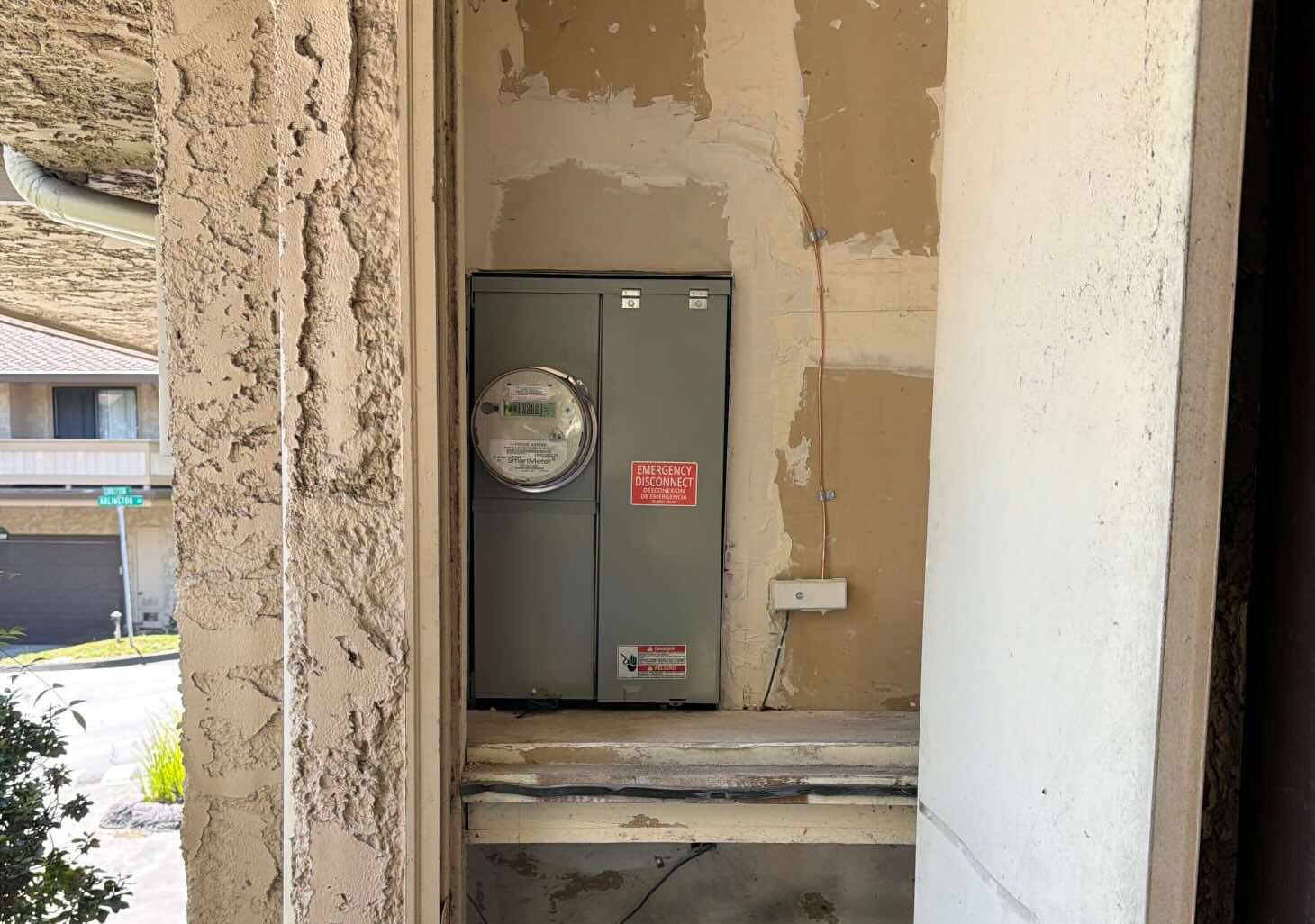
Sometimes a repair call turns out to be a panel problem. The signs are a panel with no spare breaker spaces, a fuse box instead of breakers, two wires sharing one breaker terminal, a 100 amp service in a house that has since added air conditioning or an electric range, or rust inside the enclosure. A lot of homes in our service area were built between 1950 and 1975, and Zinsco and Federal Pacific Stab-Lok panels from that era still turn up.
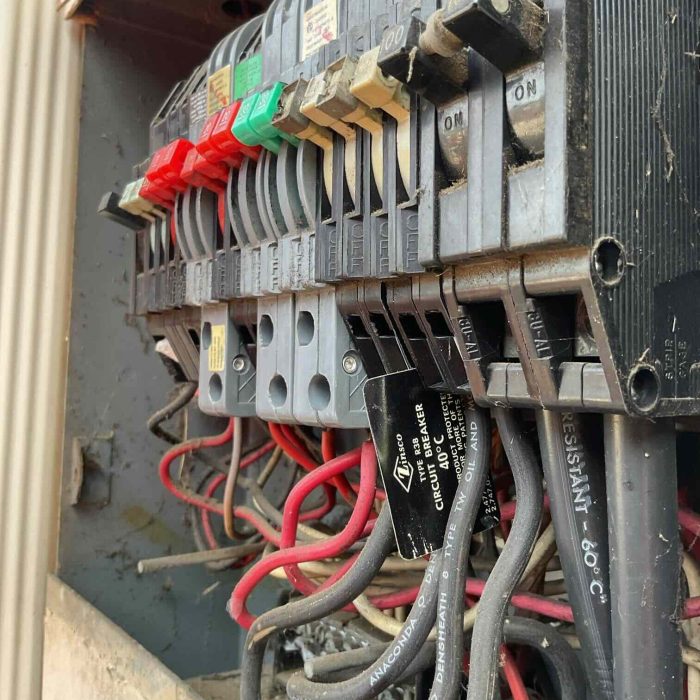
We will still fix the fault in front of us. If the panel is the reason it keeps coming back, we will tell you. Our electrical panel upgrades page covers that work, including a subpanel where a full service upgrade is not needed, and our Zinsco panel guide covers that brand in detail.
What a visit costs and when to call
Call if the breaker trips again right after a reset, if it trips with nothing plugged in, if a GFCI will not stay on, or if you notice heat, a smell, buzzing or scorch marks. Book an electrical repair and troubleshooting visit.
An electrical fault is a search problem, and the diagnostic visit is the search. It is $189 during normal hours, and we waive it if you go ahead with the repair. We do not charge by the hour. Once the technician has traced the fault, you get a written price for the repair before any work starts. We answer the phone at any hour. Evenings and weekends cost more, and we tell you the after hours rate when you call rather than after we arrive. Members of our Annual Home Protection Plan pay nothing for the diagnostic and no after hours charge.
While you wait, write down which rooms and outlets are affected, what was running when it tripped, and whether any GFCI has tripped. That shortens the search once a technician is in the house.
Bellows has been in business since 1984 and holds California contractor license 483881, with the C36 plumbing, C20 heating and air conditioning, and C10 electrical classifications. Our electricians work across Santa Cruz, Santa Clara, Sonoma and Marin County.
Frequently asked questions
Is a breaker that keeps tripping dangerous?
The trip itself is the breaker protecting you. The danger is whatever it is protecting you from, and resetting it over and over takes that protection away. Reset it once. If it trips again, leave it off and have it inspected. Treat a burning smell, a warm faceplate, scorch marks or sparking as a reason to call straight away.
Why does my breaker trip with nothing plugged in?
When a breaker trips the moment it is reset and nothing is drawing power, the fault is usually in the wiring: a short circuit, a damaged cable or a loose connection. Leave it off and have an electrician trace it.
Can I plug a space heater into a power strip or extension cord?
No. The Consumer Product Safety Commission says never to power a heater with an extension cord or power strip. Plug it straight into a wall outlet, and keep it at least 3 feet from anything that can catch fire.
What is the difference between a GFCI and an AFCI?
A GFCI cuts power when current leaks to ground, which protects people from shock. An AFCI cuts power when it detects arcing in the wiring, which protects the house from fire.
How much does it cost to have an electrician find the problem?
The diagnostic visit is $189 during normal hours, and we waive it if you go ahead with the repair. You get a written price for the repair before any work starts, and we do not bill by the hour.
Need a hand with this?
Bellows has served homes since 1984 across Santa Cruz, Monterey, Santa Clara, San Mateo, Marin, Sonoma and Napa counties. The $189 diagnostic is waived if you go ahead with the repair, and you get a written price before any work starts.