
Your neighbor’s air conditioner rumbles to life at 2 AM, rattling through your bedroom window and jerking you awake. You lie there fuming – then realize with sinking dread that yours probably does the same to them.
In Bay Area neighborhoods where homes squeeze close together, where condos share walls and townhomes share courtyards, AC noise isn’t just annoying. It’s the thing that destroys neighborly relations and turns summer cooling into a source of constant anxiety.
I’ve helped hundreds of Bay Area homeowners solve this exact problem through proper system selection and installation techniques that make cooling systems virtually silent. Here’s how to choose genuinely quiet AC systems and install them so your neighbors never know they’re running.
Why Your Neighbor’s AC Sounds Like a Diesel Engine – And Yours Doesn’t Have To
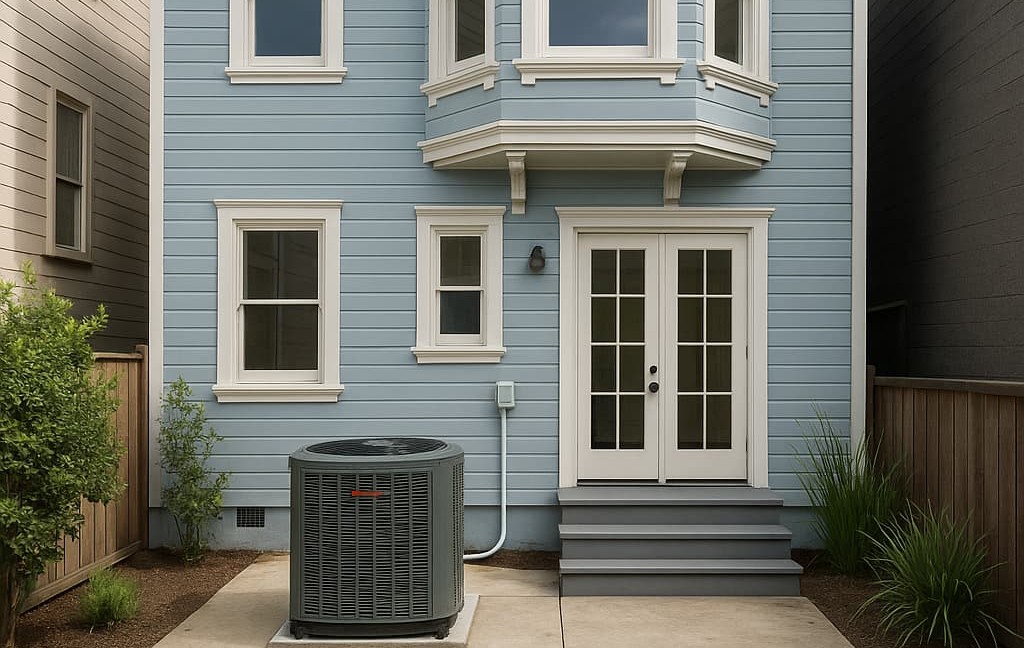
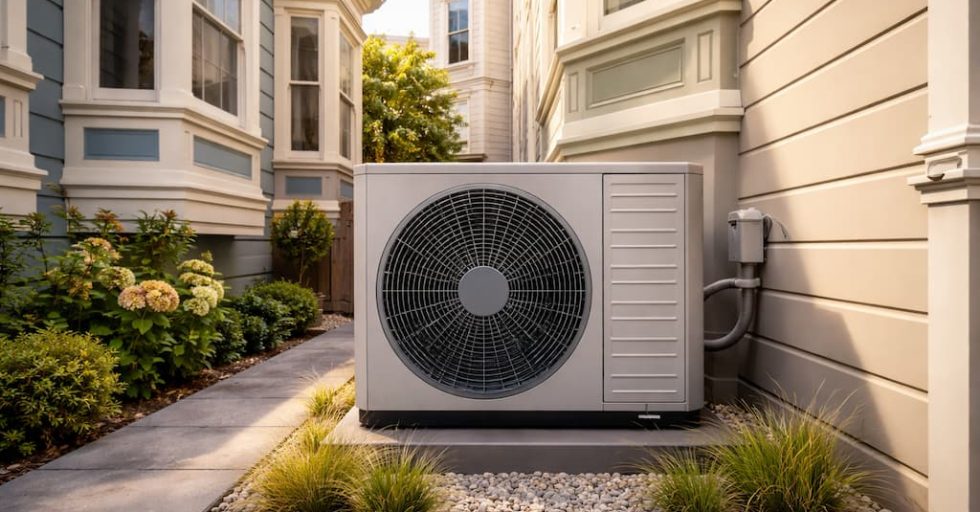
Bay Area housing density creates acoustic nightmares that suburban installations never face. San Francisco Victorians sit 10 feet apart with bedroom windows facing directly into neighboring yards where outdoor units rumble. Oakland bungalows share property lines so close that one household’s AC becomes everyone’s problem. San Jose townhome developments cluster units around shared courtyards that amplify and reflect every compressor startup. Marin condos mount outdoor units on balconies that broadcast noise through multiple residences.
The acoustic reality of dense housing multiplies noise impact beyond what decibel ratings suggest. Sound doesn’t just travel from your unit to your neighbor’s window – it reflects off nearby walls, bounces through courtyards, resonates through shared structures. An AC that measures 70 decibels at three feet might create 65 decibels at your neighbor’s bedroom window in a suburban setting. That same unit in a courtyard setting with reflective surfaces? It hits 68-70 decibels because sound waves reinforce rather than dissipate.
These aren’t inevitable consequences of air conditioning – they’re the results of treating noise as an afterthought instead of a primary design consideration. Bay Area dense housing demands different acoustic solutions than suburban homes enjoy. Modern technology and proper installation techniques can deliver cooling so quiet your neighbors won’t know it’s operating.
Decibel Ratings Decoded – What “Quiet” AC Systems Specifications Actually Means
Every AC specification sheet lists a decibel rating. Most homeowners see those numbers and have no context for what they actually mean. The decibel scale is logarithmic, not linear. A 3 dB increase represents roughly double the acoustic energy. That “small” 4 dB difference between systems represents a dramatic difference in how loud they sound to human ears.
Real-world comparisons make decibel ratings meaningful. Normal conversation happens around 60 dB. Your refrigerator running? About 40 dB. A typical budget AC system? 70-75 dB at three feet from the outdoor unit – roughly equivalent to a vacuum cleaner or busy traffic. Premium quiet systems? 55-58 dB – about the volume of light rainfall or a quiet office. Ultra-premium whisper units hit 50-53 dB – quieter than moderate rainfall, barely noticeable from inside adjacent homes.
Here’s where manufacturers play games with specs. They’ll advertise “as low as 56 dB!” in marketing materials. Read the fine print – that rating applies at maximum distance in ideal acoustic conditions with the system running at minimum capacity. Real-world operation at full capacity on a hot Bay Area afternoon? That same unit might hit 68 dB at the outdoor unit location.
What should you actually look for in specifications? Start with the stated dB rating at three feet during standard operation, not minimum capacity. Systems rated 65 dB or below at this distance qualify as genuinely quiet. Below 60 dB? That’s premium quiet territory. Below 55 dB? You’re looking at ultra-premium whisper systems that cost more but deliver peace worth the investment in dense neighborhoods.
The Inverter Technology Revolution That Makes Modern ACs Whisper Instead of Roar
The single biggest technological advance in quiet AC operation isn’t sound insulation or fan design – it’s inverter technology that fundamentally changes how compressors operate.
Conventional AC systems use single-speed compressors that operate like light switches – fully on or completely off. Your thermostat calls for cooling, the compressor starts at full power with a surge of mechanical noise, runs at maximum capacity creating sustained sound, then shuts off completely. This cycling creates the characteristic rumble-silence-rumble pattern. Each startup generates peak noise as components engage and accelerate to full speed instantly.
Inverter systems – also called variable-speed or modulating systems – operate completely differently. Instead of switching on and off, the compressor runs continuously at variable speeds matched precisely to cooling demand. Need minimal cooling on a mild morning? The compressor ramps to 20-30% capacity, running so quietly you can’t hear it from 10 feet away. Temperature climbing on a hot afternoon? It gradually increases to 60-80% capacity, still avoiding the peak noise of full-power startup.
This gradual ramping makes inverter systems far quieter than conventional units. Peak noise during startup – the most annoying sound signature – simply doesn’t happen. The compressor smoothly accelerates rather than jolting to life. Sustained operation happens at lower speeds most of the time rather than constantly at full blast.
Bay Area climate suits variable-speed technology perfectly because most cooling days aren’t extreme. Coastal areas with temperatures in the 70s-80s? The system runs at 30-40% capacity all day – whisper quiet. Inland valleys hitting 95 degrees? The system gradually increases capacity as temperature rises. The marine layer moderating afternoon heat? The system throttles down smoothly rather than shutting off and creating silence broken by jarring restarts.
The energy efficiency bonus of inverter technology compounds the value beyond noise reduction. Running at partial capacity consumes far less electricity than repeatedly starting and stopping at full power. The same technology that makes systems quieter also makes them 30-40% more efficient than conventional units.
Seven Sound-Dampening Features That Separate Genuinely Quiet AC Systems From Marketing Hype
Inverter technology provides the foundation for quiet operation, but truly silent systems incorporate multiple additional features that work together to minimize noise:
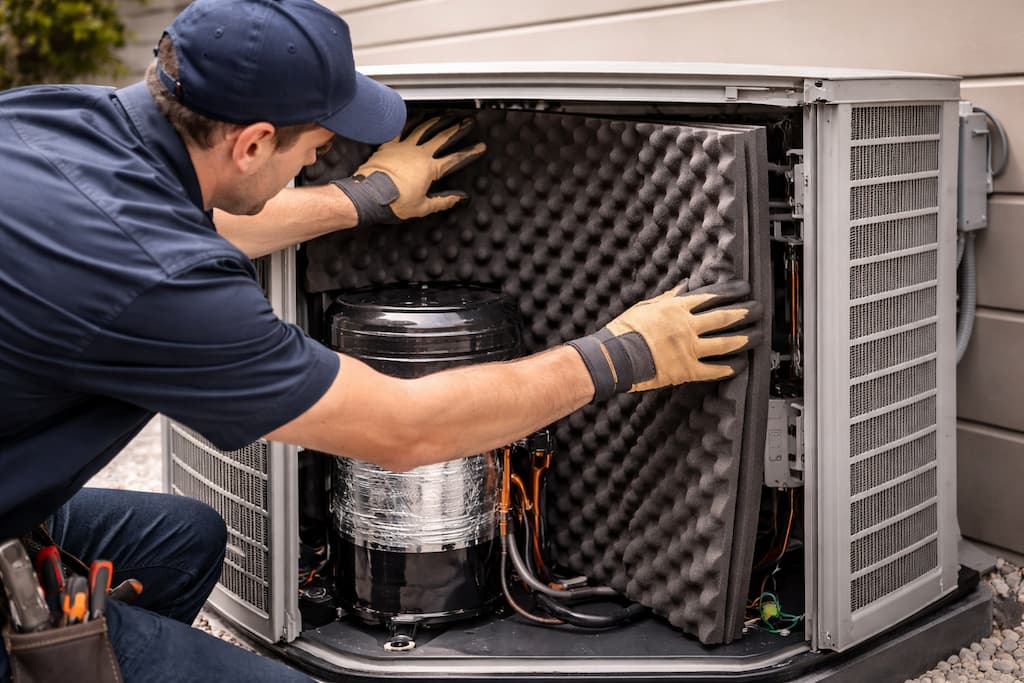
Compressor insulation and isolation. Premium systems wrap the compressor – the primary noise source – in sound-absorbing insulation materials. The compressor mounts on rubber isolation feet rather than directly to the metal base, preventing vibration transmission. This isolation prevents the compressor’s mechanical vibration from turning the entire outdoor unit into a resonating chamber.
Advanced fan blade design and materials. Quiet systems use swept fan blade designs that move air efficiently with less turbulence. Some manufacturers use composite materials for fan blades instead of metal, reducing the resonant frequencies that create tonal noise. Fan blade count and spacing affect acoustic signature.
Anti-vibration mounting systems. Premium quiet systems use rubber grommets, isolation washers, and dampening materials at every mounting point. The fan motor mounts on vibration isolators. Panels attach with rubber-grommet hardware rather than direct metal-to-metal contact.
Sound blanket wraps. Some systems include sound blankets – specialized insulation wraps that cover the compressor compartment. These dense, sound-absorbing materials reduce noise transmission through cabinet walls. The difference runs 3-5 dB compared to the same system without blankets.
Two-stage or modulating compressor operation. True modulating systems with infinite capacity adjustment from 20-100% provide the quietest operation because they rarely need to run at peak capacity that generates maximum noise.
Scroll compressor technology. Scroll compressors use smooth, continuous rotation rather than the reciprocating piston action of conventional compressors. This eliminates the mechanical hammering sound signature of piston compressors.
Direct-drive fan motors. Belt-driven fans create additional noise from belt slap and pulley vibration. Direct-drive motors eliminate these extra noise sources while also improving reliability.
These features work synergistically – a system with inverter technology and compressor isolation performs better than one with either feature alone. Premium quiet systems incorporate five or more of these features.
Installation Techniques That Make or Break Acoustic Performance in Bay Area Homes
You could install the quietest AC system ever manufactured and still create a noise problem through poor installation practices. Installation matters as much as equipment selection.
Outdoor unit placement strategy. Location determines how much your AC noise affects neighbors. The ideal placement puts maximum distance between the outdoor unit and property lines, bedroom windows, and outdoor living spaces. Bay Area lot sizes often make this challenging. When perfect placement isn’t possible, focus on the least-bad option – minimize impact on sleeping areas even if that means some patio noise.
Consider acoustic barriers naturally present in the placement location. An outdoor unit tucked behind the garage with the building mass between unit and neighbors performs better acoustically than one in open yard space. Some installations benefit from purpose-built sound barriers – fence sections, masonry walls, dense vegetation.
Vibration isolation pads and mounting. Direct contact between metal chassis and concrete transmits vibration into the ground and through building foundations into living spaces. Premium vibration isolation pads – thick rubber or composite materials specifically designed for HVAC applications – break this transmission path. In shared-wall housing like townhomes or duplexes, this isolation prevents your AC from rumbling through your neighbor’s bedroom wall.
Refrigerant line installation to prevent transmission. Refrigerant lines connecting outdoor and indoor units can transmit vibration into wall cavities and ductwork where they act as speaking tubes that broadcast compressor noise throughout the home. Proper installation uses vibration-dampening hangers and avoids rigid mounting that creates vibration paths.
Ductwork considerations for shared-wall housing. Return air ductwork acts as a pathway for sound transmission. Flex ductwork reduces vibration transmission better than rigid metal ducts. Sound attenuation sections – special duct components designed to absorb sound – belong in shared-wall installations where acoustic isolation matters most.
Why Dense Bay Area Neighborhoods Demand Different Quiet AC Systems Solutions

Bay Area housing patterns create acoustic challenges that don’t exist in suburban sprawl.
San Francisco and Oakland neighborhoods built in the Victorian and Craftsman eras pack homes onto narrow lots with minimal setbacks. Your bedroom window might be 12 feet from your neighbor’s outdoor unit location. These neighborhoods weren’t designed for outdoor mechanical equipment – adding AC means accepting acoustic challenges and mitigating them through premium quiet systems.
Townhome and duplex developments share walls, foundations, and outdoor spaces. Your outdoor unit vibration can transmit through shared foundations into neighboring units. Courtyard designs create acoustic chambers that reflect and amplify sound – one unit’s AC affects six or eight neighboring homes.
Condo complexes present unique challenges through HOA regulations and dense unit clustering. Many Bay Area condo associations limit outdoor unit placement to specific locations – usually balconies or designated equipment areas. These mandated locations often create worst-case acoustic scenarios. Some associations specify maximum noise levels or “quiet hours.”
Multi-unit buildings require treating AC noise as a building-wide concern. One loud system affects dozens of residents. Roof-mounted equipment needs exceptional sound dampening because sound travels unobstructed across roof surfaces.
Property line proximity throughout the Bay Area means outdoor living spaces overlap acoustically. Summer evening barbecues, outdoor dining, yard relaxation – these activities happen throughout Bay Area neighborhoods where mild climate makes outdoor living essential. An AC that rumbles at 70+ dB ruins these spaces. Systems operating at 55-60 dB or below preserve the outdoor living culture.
The Real-World Decibel Difference Between Budget and Premium Quiet AC Systems
Let me translate acoustic specifications into real-world impact:
Entry-level conventional systems typically operate at 70-75 dB measured at three feet from the outdoor unit. At your neighbor’s property line 15 feet away, that translates to 65-68 dB. These systems announce themselves unmistakably. Neighbors know when you’re cooling your home.
Mid-range inverter systems operate at 60-65 dB at three feet during typical operation. At 15 feet property line distance, that drops to 55-58 dB – approximately the volume of rainfall. These systems fade into the background during daytime but might disturb light sleepers at night.
Premium quiet systems hit 55-58 dB at three feet during standard operation. At 15 feet property line distance, you’re looking at 48-52 dB – quieter than light rain. These systems operate unnoticeably during the day and barely register at night. Worth the premium for dense neighborhoods.
Ultra-premium whisper units achieve 50-53 dB at three feet. At 15 feet, they register 43-47 dB – approaching the ambient noise floor of a quiet residential area at night. These systems cost significantly more but deliver acoustically invisible operation even in the densest Bay Area neighborhoods.
Context determines which level makes sense. Single-family homes with reasonable setbacks might be fine with mid-range inverter systems. Shared-wall townhomes and condos benefit from premium quiet systems. Victorian conversions and ultra-dense neighborhoods might justify ultra-premium whisper units.
Turn Your Cooling Into an Acoustically Invisible Comfort System
Bay Area dense neighborhoods, shared-wall housing, and close property lines transform AC noise from minor annoyance into critical quality-of-life issue. The technology exists to make cooling systems whisper quietly enough that neighbors never notice operation. Inverter variable-speed compressors eliminate jarring startup noise. Multiple sound-dampening features minimize vibration and airflow turbulence. Premium systems operating at 55 dB or below fade into ambient background noise.
But technology alone doesn’t guarantee quiet performance. Installation techniques determine whether premium systems deliver their rated acoustic performance or create noise problems through vibration transmission and poor placement. Proper vibration isolation prevents structure-borne sound transmission. Strategic outdoor unit placement minimizes impact on neighbors’ windows and outdoor spaces. Careful refrigerant line and ductwork installation prevents noise paths into living areas.
The investment in genuinely quiet AC systems pays dividends throughout Bay Area living. Sleep without disturbance. Use your patio without compressor rumble drowning conversation. Maintain neighborly relationships. Comply with HOA noise regulations. Preserve the outdoor living culture that makes Bay Area housing valuable despite density challenges.
Bellows Plumbing, Heating, Cooling & Electrical has solved AC noise problems throughout Santa Cruz, San Jose, Marin, San Francisco, Sonoma, and Santa Clara counties. We understand the specific acoustic challenges of Bay Area dense housing – Victorian proximity, townhome courtyards, condo balcony installations, shared-wall vibration transmission. Our assessments evaluate your property’s acoustic environment and recommend systems matched to your specific noise reduction requirements.
We don’t just sell quiet systems – we install them with the vibration isolation, strategic placement, and acoustic dampening techniques that deliver genuine silent operation. Our experience with Bay Area housing types means we anticipate the challenges your situation presents and apply solutions that work in your specific density and proximity conditions.
Schedule your quiet system consultation before another summer of noise complaints and relationship strain. We’ll assess your current system’s acoustic performance, evaluate your property’s specific challenges, and recommend solutions that make your cooling system acoustically invisible to neighbors while enhancing your own outdoor living spaces.
Stop accepting AC noise as inevitable. Bay Area dense neighborhoods demand better. Modern technology and proper installation deliver better. Contact Bellows Plumbing, Heating, Cooling & Electrical today to discover how quiet your AC system can actually be when you choose the right equipment and install it correctly for your Bay Area home’s specific acoustic environment.
Quiet AC Systems for Bay Area Dense Neighborhoods: Frequently Asked Questions
What makes an AC system “quiet”?
quiet AC system is designed to minimize compressor noise, vibration, and airflow turbulence. Features such as inverter technology, sound insulation, vibration isolation, and advanced fan design significantly reduce operating noise.
Why are quiet AC systems especially important in the Bay Area?
Bay Area homes are often built close together, share walls, or face courtyards that amplify sound. Quiet AC systems help prevent noise complaints, protect neighbor relationships, and preserve outdoor living spaces.
How loud is a typical air conditioner compared to a quiet system?
Standard AC units often operate at 70–75 decibels, similar to traffic noise. Quiet AC systems typically run at 55–60 decibels or lower—closer to rainfall or background conversation.
What is inverter technology and why does it reduce AC noise?
Inverter technology allows an AC compressor to run at variable speeds instead of turning fully on and off. This eliminates loud startups, reduces vibration, and keeps the system running smoothly and quietly.
Can AC installation affect how noisy a system is?
Yes. Even the quietest AC system can become noisy if installed incorrectly. Proper placement, vibration isolation pads, flexible connections, and sound-dampening installation techniques are critical for quiet performance.
Are quiet AC systems worth the investment for dense neighborhoods?
For Bay Area homes with limited setbacks, shared walls, or HOA restrictions, quiet AC systems offer long-term value by improving comfort, reducing disputes, and maintaining quality of life.