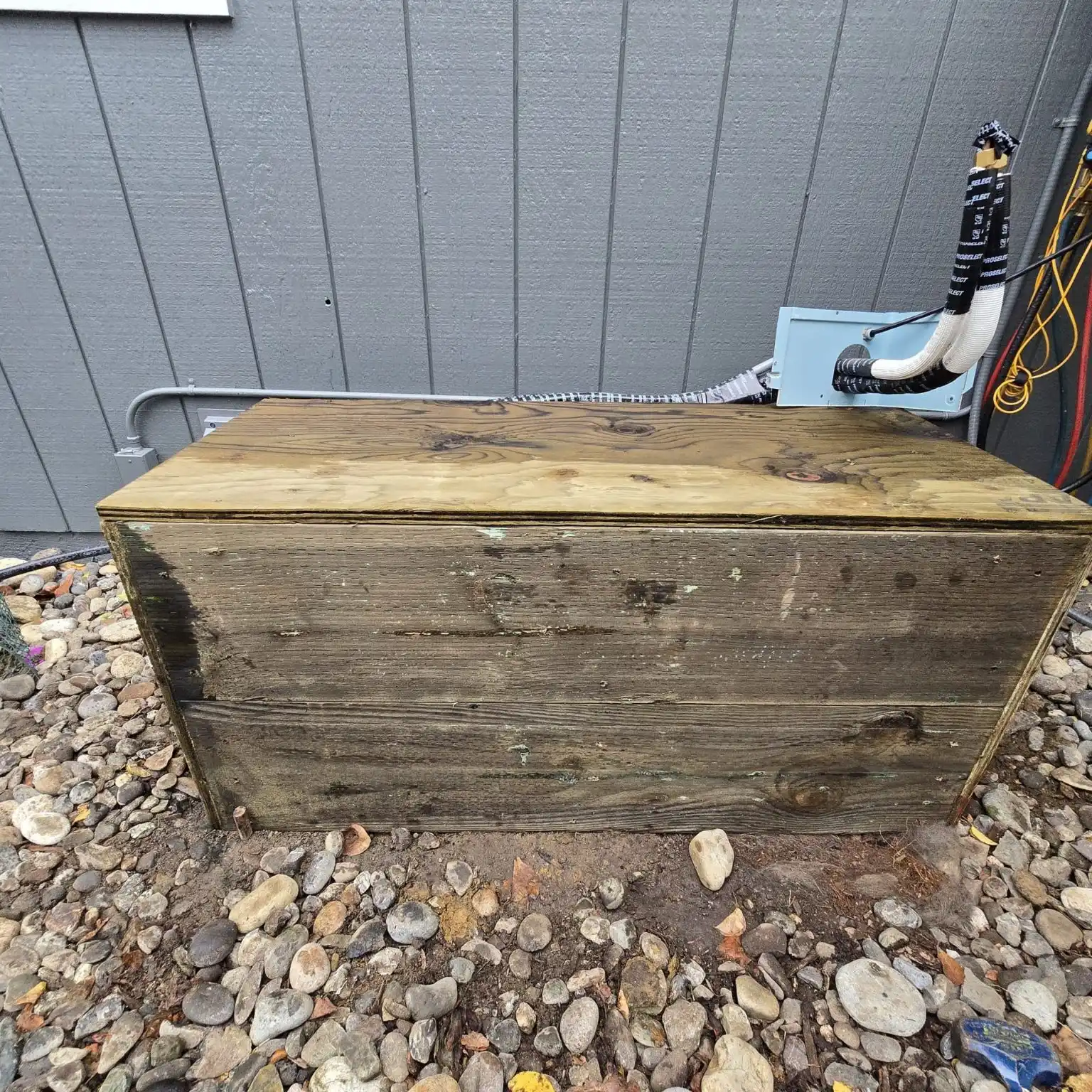
In the middle of November, a homeowner in Larkspur asked us to move fast. Flood water was likely the following week, and the outdoor half of their heat pump sat on the ground. We booked the job on November 17 and had the unit up on a 24 inch stand on November 19, a week before the November king tides. This post walks through what that job involved, why it is worth doing, and how to tell whether your own outdoor unit sits too low.
Why Larkspur homeowners are thinking about this now
In early January 2026, the highest king tides since 1998 arrived on top of days of rain. Corte Madera Creek came over its banks into the Larkspur Marina neighborhood, and homes, cars, businesses and a stretch of Highway 101 near Lucky Drive ended up under water. Marin County later filed an emergency proclamation, and named Larkspur among the cities that took damage.
King tides come back every winter. The California Coastal Commission lists this season’s dates as November 24 to 26, December 23 to 25, and January 21 to 22, with a few extra days likely in Northern California. A storm that lines up with one of those windows is what turns a high tide into a flood.
Most of a heat pump system is safe inside the house. The outdoor unit is not. It holds the compressor, the outdoor coil, the fan and the controls, and it usually sits on a pad at ground level, right where standing water collects.
The Larkspur job, step by step
The house has a ducted Mitsubishi heat pump: a 42,000 BTU outdoor unit, an air handler inside, and zoning that splits the house into separate areas. The equipment was about two years old and working fine. Nothing needed replacing. The only problem was height.
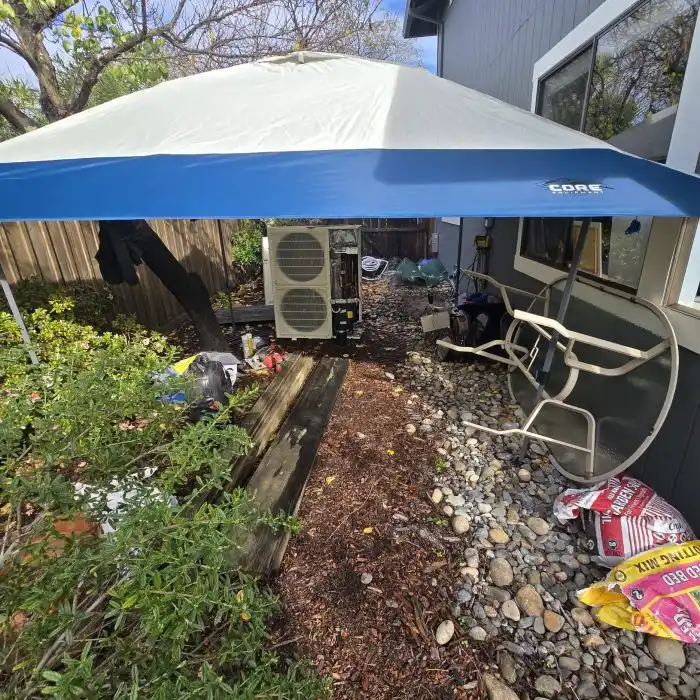
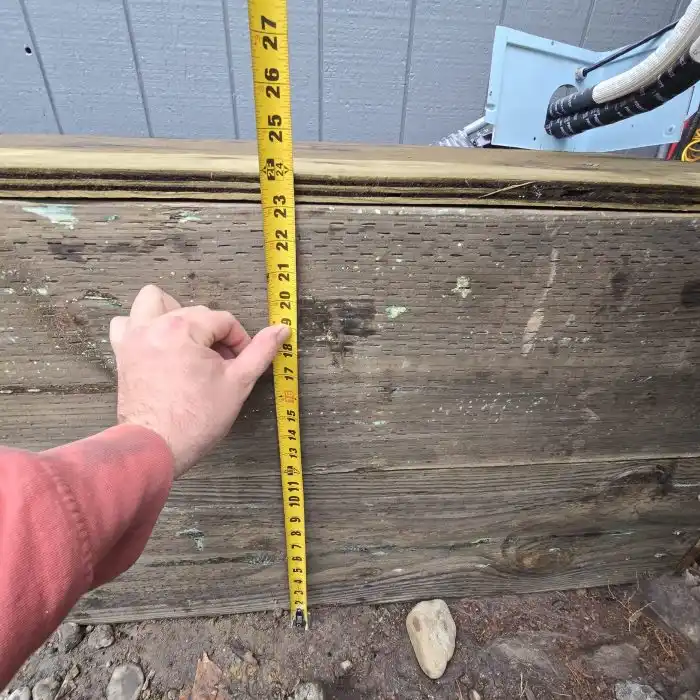
We set the stand at 24 inches, enough to put the unit above the flood level the homeowner was expecting. Here is what the work involved.
- Pump down the refrigerant. Before anything is disconnected, the technician runs the system so the refrigerant collects and stays sealed inside the outdoor unit. None of it is vented.
- Disconnect the line set. The copper lines that carry refrigerant between the indoor and outdoor units come off the outdoor unit.
- Build and place the stand. Our crew built a custom stand from pressure treated lumber on site and set it in place.
- Lift and fasten the unit. The outdoor unit goes up onto the stand and is attached to it.
- Tie it back to the house. A unit two feet up has more leverage working against it than one sitting on a pad, so we added extra points of contact between the stand and the house to hold it steady.
- Extend the line set. The unit is now higher than the old connections, so the refrigerant lines need new length to reach it.
- Pressure test, then vacuum. Every new joint is pressure tested for leaks. Then the lines are pulled down to a deep vacuum to clear out air and moisture before refrigerant goes back in.
- Release the refrigerant and test. The stored refrigerant is released back into the system, and the system is run and checked before we leave.

Two technicians had it done in a day. The steps that matter most are the ones you cannot see afterwards. A raised unit with a small refrigerant leak at a new joint will look fine for months and then start losing capacity, which is why the pressure test and vacuum are not optional.
How high is high enough?
FEMA’s guidance is that outdoor heating and cooling equipment can be raised on a pedestal or platform, and should sit at least 1 foot above the base flood elevation for your property. The base flood elevation is the level a flood with a 1 percent chance of happening in any given year is expected to reach. Pressure treated lumber, masonry, concrete, or an existing deck or landing can all work as the base, as long as the equipment ends up at that height or above.
To find your flood zone, the County of Marin’s Marin Map viewer lets you enter a street address or parcel number and see the FEMA flood maps for it. FEMA’s Flood Map Service Center has the same official maps. If your home has an elevation certificate, it will show the base flood elevation for your lot.
Without a map, a practical check is your own memory. If water has ever reached the pad your outdoor unit sits on, or come within a few inches of it, the unit is too low.
Do not run an outdoor unit that has been under water
If flood water has already reached your outdoor unit, leave the system off at the thermostat and at the breaker until it has been checked. The unit holds electrical controls and wiring, and running it while they are wet, or while silt and debris are still inside, can turn a repairable unit into one that needs replacing.
Outdoor unit sat in flood water?
Leave it off and have it checked before you run it. We answer at any hour, with HVAC technicians across Marin, Sonoma, Santa Cruz and Santa Clara counties.
Raise it now, or when you replace it?
If your heat pump or air conditioner is near the end of its life, the natural time to raise it is during the replacement. The refrigerant work and the new lines are part of that job anyway, so building a stand at the same time saves doing that work twice. Our heat pump installation page covers what a replacement involves.
If the equipment is young, like the two year old system in Larkspur, raising it on its own makes sense when you are in a low area and flooding is a realistic risk. Waiting for a flood to decide for you usually means paying for the stand and for flood damage.
If your heat pump is already acting up after wet weather, start with a heat pump repair visit. The diagnostic is $189 during normal hours, and we waive it if you go ahead with the repair. You get a written price before any work starts.
Bellows has been in business since 1984 and holds California contractor license 483881, with the C36 plumbing, C20 heating and air conditioning, and C10 electrical classifications. Our Marin County team works out of our Novato office, and our San Rafael heat pump page covers installation in central Marin.
Frequently asked questions
How high should an outdoor heat pump unit be in a flood zone?
FEMA recommends at least 1 foot above the base flood elevation for your property. Your flood map or elevation certificate shows that elevation. In Larkspur we used a 24 inch stand, which cleared the flood level the homeowner was expecting.
Can an existing heat pump be raised, or does it need replacing?
A working heat pump can be raised. The refrigerant is pumped down into the outdoor unit, the lines are disconnected, the unit goes onto a stand, and the lines are extended, pressure tested, vacuumed and reconnected. In Larkspur, two technicians finished in a day.
Should I turn my heat pump on after flood water reached it?
No. Leave it off at the thermostat and the breaker until a technician has checked it. Running a unit with wet electrical parts or debris inside can turn a repair into a replacement.
How do I find out if my Marin home is in a flood zone?
Enter your address in the County of Marin’s Marin Map viewer to see the FEMA flood maps for your property, or look it up on FEMA’s Flood Map Service Center.
Need a hand with this?
Bellows has served homes since 1984 across Santa Cruz, Monterey, Santa Clara, San Mateo, Marin, Sonoma and Napa counties. The $189 diagnostic is waived if you go ahead with the repair, and you get a written price before any work starts.