
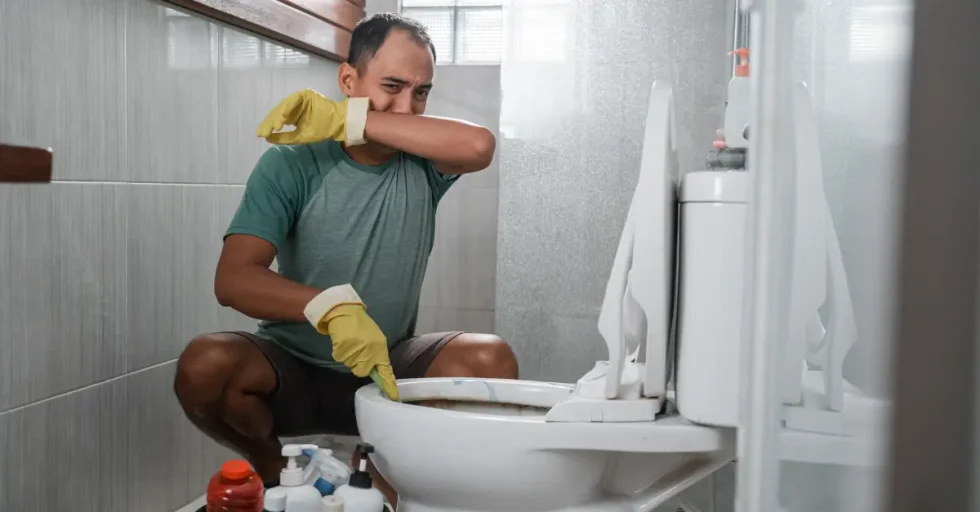
Stop ignoring that sewage smell in your bathroom. That foul odor isn’t going away on its own, and waiting makes everything worse – your comfort, your home’s air quality, potentially your health. I know this because homeowners across the Bay Area call us after living with sewer gas for weeks, assuming it’s just a temporary annoyance. It’s not.
Here’s what’s actually happening. That sewage smell means sewer gas is escaping into your bathroom, and it’s coming from one of five fixable problems with your plumbing system. Some you can handle yourself in under an hour. Others need professional intervention before they damage your pipes or create genuine health risks.
The good news? Once you understand where bathroom sewer odors originate, you can eliminate them permanently. Not mask them with air fresheners. Actually fix them.
Why Your Bathroom Smells Like Sewage (The Real Answer)
Sewer gas doesn’t magically appear in bathrooms. It escapes through specific failures in your plumbing system – failures that protect your home from the waste system beneath it. Your bathroom connects to the municipal sewer through a series of traps, vents, and seals designed to keep gases flowing away from your living space. When one component fails, you smell it immediately.
Most homeowners think sewage smells mean something catastrophic happened. Actually, the causes range from simple maintenance issues to moderate plumbing repairs. The key is identifying which problem you’re dealing with, because the fix changes completely based on the source.
Think about your bathroom’s plumbing like a breathing system. Fresh air comes in through vent pipes on your roof. Wastewater flows out through drain pipes. Traps hold water barriers that block sewer gas from rising back up. Break any part of this system – dry out a trap, crack a seal, clog a vent – and gases take the path of least resistance straight into your bathroom.
That’s why the smell sometimes comes and goes. That’s why it gets worse after you haven’t used a fixture for days. That’s why opening a window helps temporarily but never solves it. You’re treating symptoms while the actual failure continues underneath.
The 5 Causes of Sewage Smell in Bathrooms (And What Each One Means)
Every sewage odor traces back to one of these five plumbing failures. I’ve diagnosed hundreds of sewer gas complaints across Santa Cruz, San Jose, and the broader Bay Area, and they always land in one of these categories. Here’s what you’re actually dealing with.
1. Dried-Out P-Trap
The P-trap is that U-shaped pipe under your sink, shower, or tub. It holds standing water that creates an airtight seal against sewer gases rising from your drain line. When that water evaporates – usually in guest bathrooms or fixtures you don’t use regularly – the seal breaks and gases flow freely into your bathroom.
Signs this is your problem:
- Smell appears after extended periods without use – vacation returns, guest bathroom that sits empty for weeks
- Odor comes directly from the drain – get close to the fixture and the smell intensifies
- Goes away temporarily after running water – refilling the trap stops the smell for days or weeks
- Affects floor drains most severely – these dry out fastest because nobody remembers to maintain them
This is the easiest fix. Run water in every bathroom fixture for 30 seconds once a week. Pour a cup of water down floor drains monthly. The water barrier reforms and blocks gases immediately. If the smell returns within days instead of weeks, you have a different problem – likely evaporation from a leak or crack in the trap itself.
2. Damaged Wax Ring Under the Toilet
The wax ring seals your toilet base to the drain flange in your floor. When it fails – through age, movement, improper installation, or floor settling – sewer gases escape around the toilet base instead of staying contained in the waste line.
Signs this is your problem:
- Smell concentrates near the toilet – stronger on the floor around the base than anywhere else in the bathroom
- Toilet rocks slightly when you sit – movement breaks the wax seal over time
- Water appears on the floor after flushing – the seal isn’t just letting gas out, it’s letting water seep
- Smell worsens after toilet use – flushing pressurizes the system and forces gases through the failed seal
You cannot fix a wax ring without removing the toilet, replacing the ring, and reinstalling with proper compression. This is a two-hour job that risks cracking the toilet base or flange if done incorrectly. For Bay Area homeowners dealing with older homes and concrete slab foundations, I recommend professional replacement – one wrong move turns a $150 repair into a $1,500 floor reconstruction.
3. Blocked or Damaged Vent Pipe
Vent pipes run from your drain lines through your roof. They let air into your plumbing system so wastewater can flow smoothly and gases can escape outside instead of backing up into your home. Block or damage these vents and pressure forces sewer gas through the weakest point – usually a trap or seal in your bathroom.
Signs this is your problem:
- Gurgling sounds from drains when you flush – air trying to enter through drain instead of vent
- Slow drainage across multiple fixtures – lack of ventilation creates vacuum that slows flow
- Smell affects multiple bathrooms – vent serves several fixtures on the same line
- Problem appeared suddenly – bird nest, leaves, or debris blocked the roof opening
Vent problems require roof access to inspect and clear blockages. Some homeowners clear simple debris themselves. Most need professional diagnosis because the blockage might be inside the pipe where you can’t see it, or the vent might have separated at a joint inside the wall. Misdiagnosing a vent issue wastes time on fixes that don’t address the actual failure.
4. Cracked or Leaking Drain Pipe
Drain pipes carry wastewater from your fixtures to the main sewer line. Cracks, loose joints, or corrosion create openings where sewer gas escapes into wall cavities, crawl spaces, or directly into your bathroom. These leaks also waste water and can cause significant structural damage if left unaddressed.
Signs this is your problem:
- Smell persists regardless of fixture use – gases escape continuously from the damaged section
- Mold or water stains appear on walls or ceilings – leak is releasing moisture along with gases
- Odor seems to come from inside walls – the crack is in a hidden section of pipe
- Problem developed gradually over months – corrosion or settling created slow failure
Cracked drain pipes need professional diagnosis with camera inspection to locate the damage. Some cracks form in accessible areas under sinks. Others hide inside walls or under concrete slabs, requiring invasive repair work. This is why I tell Bay Area homeowners to address sewage smells quickly – a simple seal replacement today prevents a wall demolition repair six months from now.
5. Clogged or Slow Drain Creating Backup
Partial clogs restrict drainage and create pressure buildups that force gases backward through fixtures. Hair, soap buildup, and debris gradually narrow your drain pipes until water flows slowly and gases have nowhere to go except up through your bathroom drains and fixtures.
Signs this is your problem:
- Water drains slowly from sink, tub, or shower – clear indication of restricted flow
- Smell worsens when water is running – pressure from drainage forces gases through other fixtures
- Multiple fixtures drain slowly – main line has partial blockage affecting everything downstream
- Smell accompanied by standing water – severe restriction preventing proper drainage
Simple clogs respond to plunging or drain snakes. Stubborn blockages need professional augering or hydro-jetting – especially in older Bay Area homes with cast iron drain lines that accumulate decades of buildup. The key distinction is whether you’re dealing with a single fixture clog or a main line restriction. Single fixture? Try DIY first. Multiple fixtures? Call for camera inspection before the backup gets worse.
Quick Fixes You Can Try Before Calling a Plumber
Start with these homeowner-level solutions. They address the three most common causes without requiring professional tools or expertise. If these don’t eliminate your sewage smell within 24 hours, you’re dealing with something that needs professional diagnosis.
Run water in all drains for 30 seconds. This refills P-traps and re-establishes the water seal blocking sewer gases. Do this in every sink, tub, shower, and floor drain in the affected bathroom. If the smell disappears and stays gone for weeks, you fixed a dried trap. If it returns within days, the trap is leaking or cracked.
Pour water down floor drains monthly. Floor drains dry out faster than any other fixture because they’re designed to handle overflow, not regular use. One cup of water maintains the trap seal. Add a tablespoon of mineral oil to the water and it floats on top, slowing evaporation for months instead of weeks.
Check for toilet movement. Sit on the toilet and rock gently side to side. Any movement means the wax ring seal is compromised. You can temporarily slow gas escape by caulking around the toilet base, but this is a bandaid – the wax ring still needs replacement. Never caulk completely around the base or you’ll trap water from future leaks.
Inspect visible pipe connections. Look under sinks and behind toilets for loose connections, cracked traps, or corroded sections. Tighten slip nuts by hand – they only need firm pressure, not wrench-tight compression that cracks the plastic. If you see visible cracks in any pipe, that section needs replacement.
Clear drain blockages with appropriate tools. Use a plunger first – it works for 60% of simple clogs. Graduate to a drain snake for stubborn restrictions. Never pour chemical drain cleaners down pipes that might have cracks or damaged seals – the chemicals accelerate corrosion and create emergency repairs from routine maintenance.
When to Call Bellows Plumbing, Heating, Cooling & Electrical
Some sewage smell problems need professional diagnosis and repair. Here’s when DIY fixes won’t work and continued delay creates bigger problems than you’re solving.
The smell returns within days after running water. Your P-trap has a leak or crack that prevents it from holding the water seal. This requires trap replacement – straightforward for accessible sink traps, more involved for shower or tub drains hidden behind walls or under floors.
Multiple bathrooms smell like sewage simultaneously. You’re dealing with a main line issue – blocked vent, damaged drain section, or sewer line problem affecting your entire system. These problems don’t fix themselves and typically worsen as pressure builds in your plumbing system.
You hear gurgling from drains when other fixtures are used. This signals ventilation failure. Air is being pulled through drain traps instead of entering through roof vents. The longer this continues, the more likely you’ll experience complete trap siphoning – where the gurgling actually pulls water out of your traps and breaks the seal entirely.
Water stains or mold appear near the sewage smell. You have an active leak releasing both water and gases. This damages your home’s structure, creates health hazards from mold growth, and gets exponentially more expensive to repair the longer it continues. Water damage compounds daily.
The toilet rocks when you sit on it. The wax ring seal has failed and needs replacement. This is not a project where “close enough” works – improper installation creates leaks that rot your subfloor and require floor reconstruction beyond simple toilet replacement.
Drain clearing attempts don’t improve slow drainage. The blockage is beyond homeowner tools – too deep in the line, too stubborn for snaking, or actually a pipe failure rather than a clog. Professional camera inspection shows exactly what you’re dealing with and prevents wasted effort on fixes that don’t match your problem.
Why Bay Area Homeowners Choose Bellows for Sewer Gas Problems
We’ve diagnosed and repaired sewage smell issues across Santa Cruz, San Jose, Marin, San Francisco, Sonoma, and Santa Clara for decades. Our technicians understand the specific challenges Bay Area homes face – older drain systems, earthquake settling that shifts pipes, and retrofit requirements that affect how we approach repairs.
When you call Bellows Plumbing, Heating, Cooling & Electrical for sewage odor diagnosis, we start with camera inspection to see exactly what’s happening inside your drain lines. No guessing. No trial-and-error repairs. We show you the problem, explain your options, and fix it correctly the first time.
More importantly, we identify problems before they become emergencies. That small crack releasing sewer gas today becomes a full pipe failure and water damage event tomorrow. The partially blocked vent that’s creating odors now will completely block and back up sewage into your home next month. We prevent the expensive disaster by addressing the affordable repair while you still have that option.
Stop Living with Sewage Smells – Get Your Bathroom Fixed
Here’s what happens if you ignore bathroom sewage odors. The smell gets worse. The underlying problem expands. What could have been a quick trap replacement becomes a wall demolition project. What could have been a simple vent clearing becomes a full pipe replacement after the blockage creates a backup that cracks your drain line.
You don’t have to live with this. You don’t have to wonder whether that smell is dangerous or just annoying. You don’t have to try random fixes hoping something works. Get professional diagnosis that identifies your exact problem and fixes it permanently.
Start by trying the simple solutions – run water in drains, check for toilet movement, clear visible clogs. Give these 24 hours. If the sewage smell persists or returns quickly, you’re dealing with something beyond homeowner repairs.
Call Bellows Plumbing, Heating, Cooling & Electrical. We serve the entire San Francisco Bay Area with same-day service for urgent issues like sewage odors. Our technicians carry the tools and parts to complete most repairs during the initial visit. No waiting weeks for appointments. No temporary fixes that fail in days. Permanent solutions that eliminate sewage smells and protect your home from the damage they indicate.
Your bathroom should smell clean. Your home’s air should be safe to breathe. Your plumbing should contain sewer gases in the pipes where they belong. Make that happen today instead of hoping the problem disappears tomorrow. It won’t. But we can fix it.