
Three weeks ago, I walked into a Santa Clara home where the owners had been without hot water for two days. They’d called four different contractors, gotten four wildly different recommendations, and felt more confused than when they started. Sound familiar?
Your water heater decision shouldn’t feel this overwhelming. Yet here you are, comparing tankless vs traditional water heaters in Santa Clara, drowning in conflicting advice from contractors who seem more interested in selling their preferred system than understanding your specific needs.
What if I told you that 80% of homeowners choose the wrong water heater type for their situation? Not because the systems don’t work, but because they’re making decisions based on generic advice that ignores what actually matters in Santa Clara homes.
I know this because I’ve spent years helping Bay Area homeowners at Bellows Plumbing, Heating, Cooling & Electrical navigate these exact decisions. Here’s the framework that eliminates the guesswork and gets you the right water heater for your home.
Tankless vs Traditional Water Heaters: Why Every Guide Gets Santa Clara Wrong
You might think I’m exaggerating, but consider this – most comparison guides treat all homes the same. They ignore Santa Clara’s specific water hardness, our moderate climate that affects performance differently than extreme weather zones, and California’s rapidly changing energy incentives that alter the cost equation entirely.
Here’s what I see happen repeatedly: Homeowners read that “tankless saves 30% on energy bills” and assume it’s automatically better. Or they stick with traditional tanks because “we’ve always had one” without considering whether it still makes sense for their evolving needs.
Both approaches miss the critical factors. Your home’s existing infrastructure, your family’s actual hot water usage patterns, and your long-term plans matter far more than generic efficiency ratings. Let me show you what really determines the right choice for Santa Clara homes.
The Real Performance Story: Traditional Tank Systems in Santa Clara
Traditional tank water heaters store and continuously heat 40-80 gallons of water. In Santa Clara’s mild climate – rarely below 40°F or above 85°F – these systems operate in their optimal temperature range year-round. That’s actually significant.
Why does this matter? Because I’ve seen traditional systems in Santa Clara deliver 15-20% better efficiency than the same units in extreme climates. Your heating costs stay predictable, performance remains consistent, and you avoid the temperature fluctuations that plague tankless systems in variable weather.
But here’s where it gets interesting. The same moderate climate that helps traditional tanks also reduces some of their biggest disadvantages. Standby heat loss – the energy wasted keeping water hot when you’re not using it – drops significantly when ambient temperatures stay moderate.
Traditional Tank Advantages That Matter in Santa Clara
- Lower upfront investment – Installation typically runs 50-70% less than comparable tankless systems
- Immediate hot water delivery – No startup delays when you turn on taps or appliances
- Simple maintenance requirements – Annual flushing and periodic anode rod replacement keep systems running efficiently
- Power outage reliability – Gas models continue providing hot water during electrical disruptions
- High-volume capacity – Handles simultaneous usage from multiple fixtures without flow restrictions
Now, what about the disadvantages everyone talks about?
Traditional Tank Limitations
- Space requirements – Takes valuable floor space in utility areas or garages
- Limited hot water supply – Once depleted, you wait 30-60 minutes for recovery
- Shorter replacement cycle – Typically need replacement every 8-12 years
- Catastrophic failure risk – Tank ruptures can cause significant water damage
Tankless Reality Check: What Works and What Doesn’t in Santa Clara
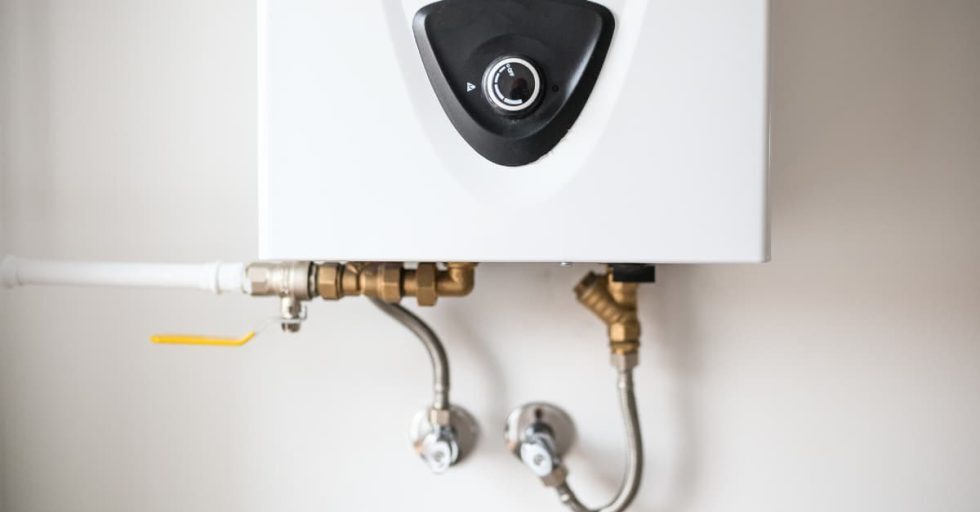
Tankless water heaters heat water on-demand as it flows through the unit. No storage, no standby losses, unlimited hot water. Sounds perfect, right? Well, let me share what I’ve learned from hundreds of Santa Clara installations.
The good news first – Santa Clara’s moderate climate means tankless systems rarely deal with the extreme cold that causes performance drops in other regions. Incoming water temperatures stay relatively stable, so your unit doesn’t work as hard to reach target temperatures.
But here’s what surprises most homeowners: unlimited hot water doesn’t mean unlimited flow rate. I’ve installed tankless systems that struggled during peak usage times – morning showers while the dishwasher runs and laundry starts. The technology works, but physics still applies.
Tankless Advantages in Santa Clara Conditions
- Space efficiency – Wall-mounted units free up floor space for storage or other uses
- Extended lifespan – Quality units last 15-20 years with proper maintenance
- On-demand heating – Only uses energy when you actually need hot water
- No storage tank failures – Cannot leak and flood your utility area
- Consistent temperature delivery – Modern units maintain precise temperature control
Tankless Challenges You Should Know About
- Higher installation complexity – Often requires gas line upgrades, venting modifications, or electrical panel changes
- Flow rate limitations – Maximum simultaneous usage depends on unit size and incoming water temperature
- Maintenance requirements – Annual descaling essential in Santa Clara’s moderately hard water conditions
- Temperature fluctuation periods – Brief delays when switching between fixtures or restarting after periods of non-use
Your Santa Clara Decision Framework: Infrastructure, Usage, and Goals
Here’s where most homeowners get stuck – they’re trying to choose between systems without understanding how their specific situation affects performance and value. Let me walk you through the evaluation process I use with clients.
Evaluate Your Home’s Current Infrastructure
Santa Clara homes built before 1990 often have undersized gas lines for modern tankless installations. Does yours need upgrading? Electric service panels may require modifications for high-demand tankless units. These aren’t deal-breakers, but they significantly impact your total project investment.
I always recommend checking three things before deciding: gas line capacity, electrical panel availability, and venting requirements. If major upgrades are needed, traditional tanks often provide better value. If your infrastructure can support tankless installation easily, the long-term benefits become more attractive.
Analyze Your Real Usage Patterns
Forget about theoretical efficiency ratings. How does your family actually use hot water? Do you have teenagers taking long showers? Do you run dishwashers and washing machines during peak morning hours? Do multiple people shower within short timeframes?
I’ve found that families with high simultaneous demand – three or more fixtures needing hot water at once – often find traditional tanks more satisfying. The stored capacity handles peak usage without performance drops. Families with staggered usage throughout the day benefit more from tankless efficiency.
Consider Your Long-Term Plans
Are you planning to stay in your Santa Clara home for the next decade? Are you considering solar installation or participating in California’s building electrification programs? These factors change the optimal choice significantly.
Current rebate programs offer substantial incentives – up to $2,000 for qualifying heat pump water heaters and $1,500 for high-efficiency tankless units. But these programs evolve rapidly. Plan based on your situation today while keeping future opportunities in mind.
The Total Cost Reality in Santa Clara County
Let’s talk numbers without the sales pitch. Traditional tank installation in Santa Clara typically involves straightforward replacement of existing units. Tankless installation often requires additional work – gas line sizing, venting modifications, electrical upgrades.
Factor in maintenance costs over time. Traditional tanks need annual flushing and anode rod replacement every few years. Tankless units require annual descaling and periodic component replacement. Neither is maintenance-free.
The break-even point usually occurs 7-10 years after installation, depending on your specific usage and local utility rates. But here’s what matters more – which system better fits your lifestyle and home’s infrastructure? The most efficient system is worthless if it doesn’t meet your needs reliably.
Making Your Decision: Which System Serves Your Santa Clara Home Best?
You now understand what really determines the right water heater choice for your specific situation. Not generic advice from national websites, not sales pressure from contractors pushing their preferred systems, but facts about your home, your usage, and your goals.
Choose traditional tanks if you value simplicity, lower upfront costs, and reliable high-volume delivery. Your existing infrastructure probably supports easy replacement, maintenance stays straightforward, and performance remains predictable.
Choose tankless if you prioritize space efficiency, long-term energy savings, and unlimited duration hot water. Your infrastructure can support the installation requirements, your usage patterns favor on-demand heating, and you’re planning to stay in your home long enough to realize the efficiency benefits.
Take Action: Your Next Steps to Better Hot Water
Stop second-guessing yourself. Stop collecting more opinions from contractors with different agendas. You have the framework to make this decision confidently.
Start by evaluating your current system’s remaining lifespan. If you’re facing immediate replacement due to failure, traditional tanks offer faster solutions. If you’re planning proactively, tankless systems justify the additional investment and installation complexity.
Work with contractors who understand Santa Clara’s specific requirements – building codes, permit processes, utility rebate programs, and local installation challenges. The right professional explains your options clearly rather than pushing their preferred solution.
Your Santa Clara home deserves hot water that matches your lifestyle, budget, and long-term goals. Make this choice based on your specific situation, implement it properly, and enjoy reliable performance for the next decade or more.
Take control of your water heater decision today. Your future comfort and satisfaction depend on choosing the system that truly fits your needs. Contact Bellows Plumbing, Heating, Cooling & Electrical today for expert guidance and professional installation to ensure you make the right choice for your home!