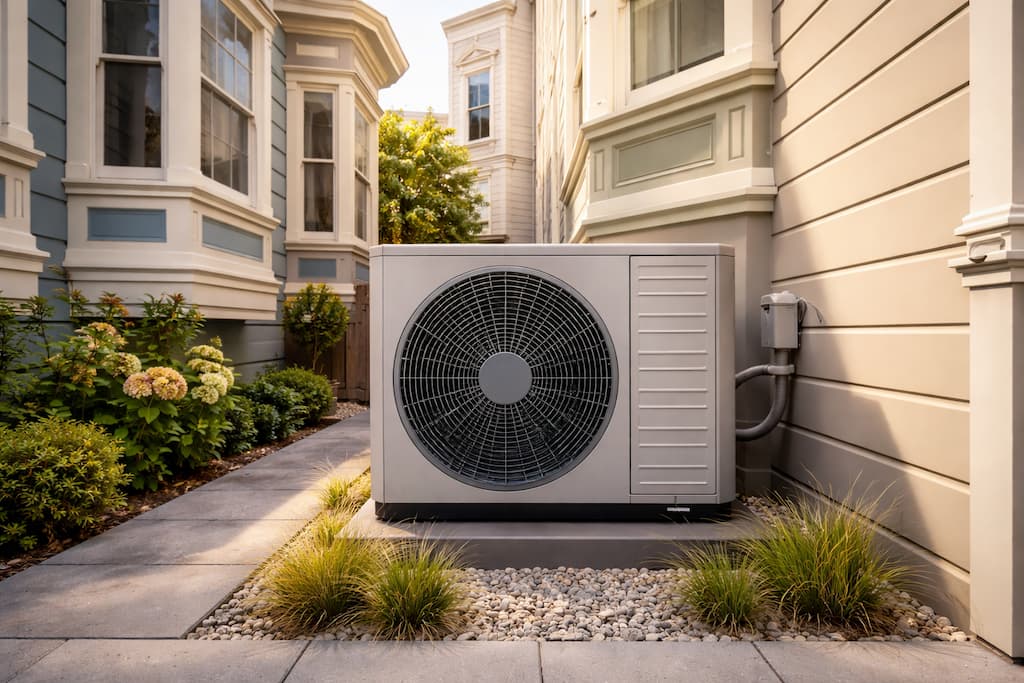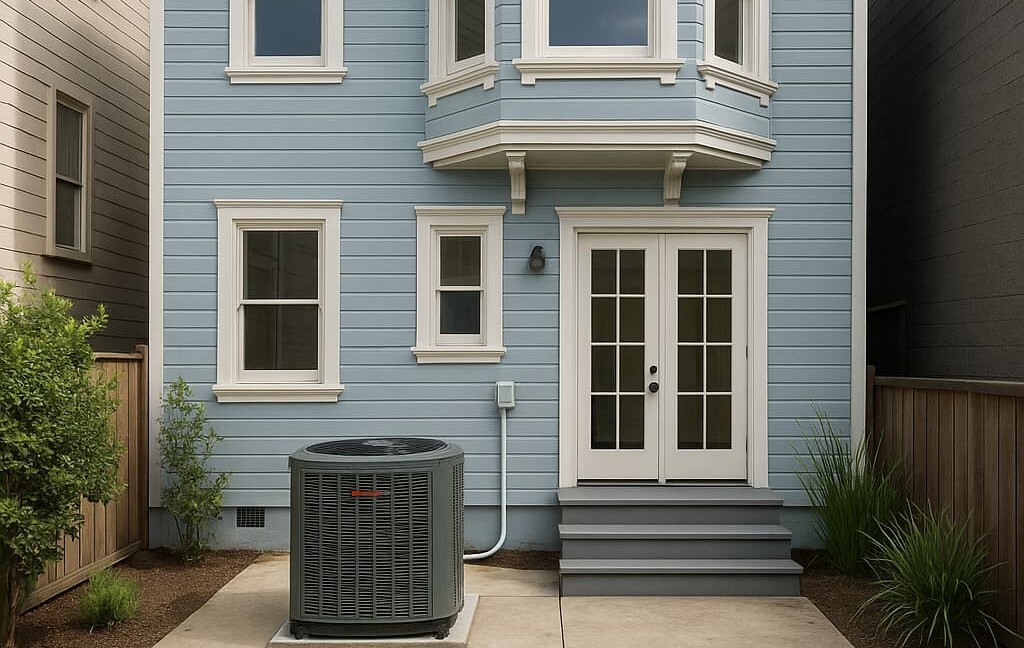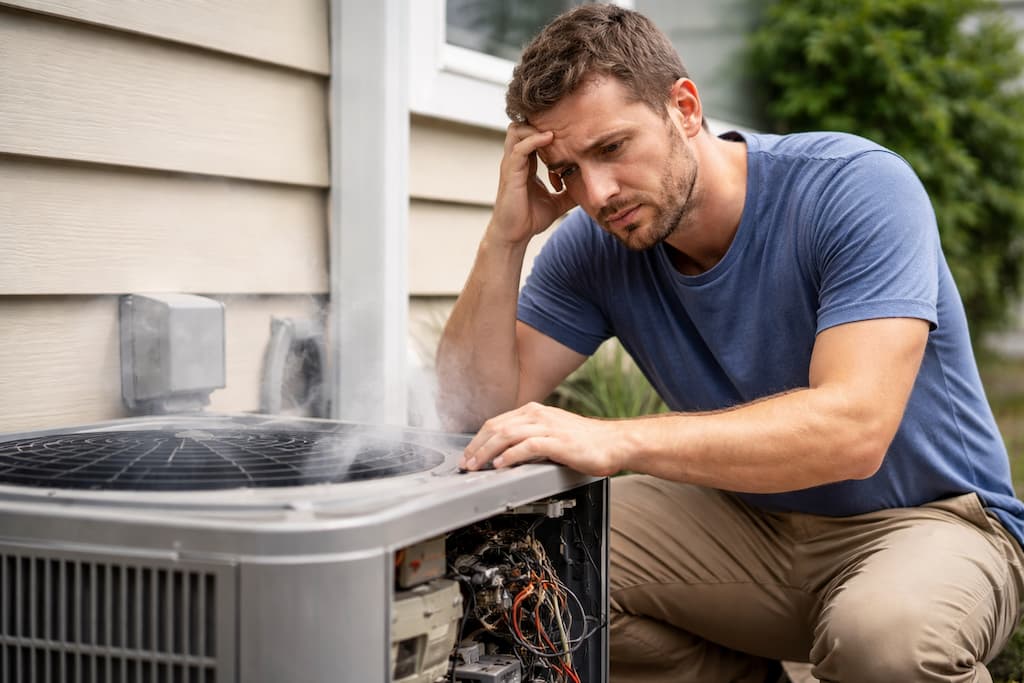

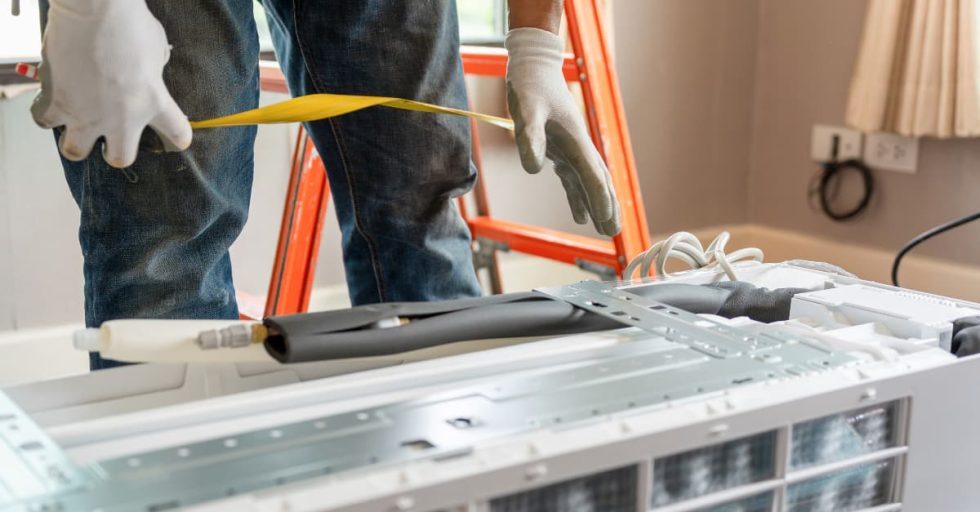
I’ll never forget the panicked call I received last July. A homeowner in Walnut Creek had just hosted a family barbecue when their AC system died during a 95-degree heat wave. Every HVAC contractor was booked for days. As I listened to her frustration, I realized something: most Bay Area homeowners don’t understand that AC maintenance in the Bay Area isn’t just routine upkeep – it’s insurance against the exact scenario she was living through.
What makes this even more concerning? The failure could have been prevented with a maintenance approach that addresses our region’s unique challenges. Why do so many intelligent homeowners find themselves in this position?
Could it be that the standard maintenance advice everyone follows actually misses the most critical factors for Bay Area systems? Without specialized AC maintenance services tailored to our local environment, even the most diligent homeowners can find their systems failing unexpectedly.
The Problem With Generic Maintenance Advice
Here’s what I’ve learned after years of working with Bay Area homeowners: the generic maintenance checklists you find online weren’t designed for our climate. Most guides ignore the salt air corrosion that affects coastal properties, the wildfire smoke that clogs filters in unexpected ways, and the dramatic temperature swings between our microclimates.
I often encounter homeowners who’ve diligently followed standard maintenance advice – changing filters regularly, keeping outdoor units clean – yet still face unexpected breakdowns. They assume they’re doing something wrong. But the real issue? They’re following maintenance strategies designed for stable climates, not the unique challenges we face here.
The misconception that “all maintenance is the same” costs Bay Area homeowners thousands in emergency repairs. Regional factors matter more than most people realize. A system in Santa Cruz faces different stresses than one in San Jose. Maintenance approaches must account for these differences.
Generic advice treats AC maintenance as universal. Yet our systems work harder due to coastal humidity, deal with salt air that accelerates corrosion, and filter air that varies dramatically in quality depending on fire season and location. Standard maintenance simply isn’t sufficient.
Understanding Bay Area-Specific AC Challenges
Let me walk you through what makes AC maintenance different in our region. I’ve spent years diagnosing why well-maintained systems still fail, and the patterns are clear.
Our coastal properties battle salt air that corrodes metal components faster than manufacturers anticipate. Condenser coils develop pinhole leaks, electrical connections corrode, and outdoor units deteriorate despite regular cleaning. Standard maintenance intervals don’t account for this accelerated wear.
Wildfire seasons create another challenge entirely. I’ve seen filters clog completely in days rather than months when smoke blankets the area. But here’s what most homeowners miss: smoke infiltration through minor ductwork leaks that normally wouldn’t matter. These tiny gaps become major problems during fire season.
Then there’s our microclimate reality. A system in foggy San Francisco operates under different conditions than one in sunny Walnut Creek. Temperature variations stress components differently. Humidity levels vary dramatically. Maintenance timing and focus must adapt to these local conditions.
Even minor seismic activity affects AC systems. Vibrations can loosen connections, shift ductwork, or affect outdoor unit alignment. Most maintenance checklists never address these subtle but cumulative impacts. Yet I regularly find problems that trace back to these overlooked factors.
The key insight? Effective maintenance requires understanding your system’s specific environment, not following universal guidelines.
The Complete Bay Area AC Maintenance System
Now let me share the maintenance approach that actually works for our region. This system addresses both standard requirements and Bay Area-specific challenges that cause most unexpected failures.
The foundation starts with understanding that maintenance frequency must vary based on your location. Coastal properties need more frequent inspections. Areas affected by wildfire smoke require adaptive filter schedules. Inland locations with extreme heat cycles need different attention than moderate coastal zones.
What does this look like in practice? Rather than rigid schedules, you’ll learn to read your system’s condition and adapt accordingly. This approach prevents the surprises that catch most homeowners off guard.
Monthly Attention Points
Your monthly routine should focus on early problem detection. These quick checks take minutes but prevent major issues.
- Air Filter Assessment – Check condition monthly, replace based on actual dirt accumulation rather than calendar dates. Bay Area’s variable air quality makes rigid schedules ineffective.
- Thermostat Performance Check – Verify temperature readings match actual room temperature. Coastal humidity affects accuracy more than most realize.
- Outdoor Unit Clearance – Maintain proper clearance, remove debris, check for vegetation growth that could restrict airflow as seasons change.
- Drainage System Inspection – Check condensate drain for clogs, particularly important in humid coastal areas where problems develop quickly.
- Unusual Sound Monitoring – Listen for changes in system operation that might indicate developing problems.
Why monthly attention? Because our climate creates rapid changes that can affect system performance. Monthly checks catch issues while they’re still minor and easily corrected.
Quarterly Deep Assessment
Every three months, dig deeper into system condition. This is where you catch the subtle problems that lead to major failures.
- Coil Condition Evaluation – Inspect both evaporator and condenser coils for dirt buildup, salt residue near coast, or ash accumulation from fire season.
- Ductwork Visual Review – Check accessible ductwork for leaks, disconnections, or pest intrusion common in Bay Area crawl spaces.
- System Performance Analysis – Monitor cooling cycles, temperature differential between supply and return air, energy consumption patterns.
- Electrical Connection Inspection – Look for loose connections, corrosion signs, or wear that could lead to system failure.
- Refrigerant Line Assessment – Check for obvious leaks, ice formation, or other signs of refrigerant issues.
Quarterly assessments reveal trends in system condition. Is efficiency declining? Are certain components showing accelerated wear? This information helps you stay ahead of problems.
Annual Professional Service Requirements
Once yearly, bring in professional expertise for components beyond typical homeowner capability. This comprehensive service addresses technical aspects that require specialized knowledge and equipment.
- Refrigerant System Analysis – Professional testing of refrigerant levels, leak detection, system pressure verification. Improper refrigerant charge reduces efficiency and can damage compressors.
- Motor and Belt Service – Lubrication, belt tension adjustment, wear assessment, bearing inspection. These components fail gradually, giving warning signs professionals can interpret.
- Control System Calibration – Thermostat calibration, safety switch testing, control sequence verification. Accurate controls prevent waste and extend system life.
- Comprehensive Performance Testing – Airflow measurement, temperature differential analysis, electrical consumption assessment, overall efficiency evaluation.
- Seismic Impact Assessment – Check for settling, connection loosening, or alignment issues that might affect long-term reliability.
Professional service catches problems you can’t detect with basic tools. More importantly, professionals familiar with Bay Area conditions understand what to look for based on your specific location and environmental factors.
Recognizing Warning Signs Before Emergency Strikes
The difference between minor repairs and major failures often comes down to recognizing early warning signs. Here’s what to watch for based on my experience with Bay Area systems.
Temperature inconsistencies appear first. Hot spots in certain rooms, inability to maintain set temperatures, or longer cooling cycles all indicate developing problems. These signs often appear weeks before complete failure.
Sound changes provide another early warning. New noises – grinding, squealing, banging – suggest mechanical problems that worsen without attention. The key is noticing changes from your system’s normal operation patterns.
Energy consumption increases often signal efficiency loss from poor maintenance or failing components. Sudden spikes in cooling costs deserve immediate attention, as they indicate your system is working harder to achieve the same results.
Air quality changes – increased dust, strange odors, higher humidity levels – suggest filtration or airflow problems. These issues affect both comfort and system performance.
Frequent cycling, where systems turn on and off repeatedly without completing full cooling cycles, indicates problems with thermostats, refrigerant levels, or airflow that need professional diagnosis.
The pattern I see repeatedly: homeowners ignore these early signs until complete failure forces emergency service. Early attention prevents this expensive outcome.
The Real Return on Maintenance Investment
Let me share what proper maintenance actually delivers beyond avoiding breakdowns. The benefits compound over your system’s lifetime in ways most homeowners don’t fully appreciate.
Energy efficiency improvements alone justify maintenance investment. Clean coils, proper refrigerant levels, and optimal airflow reduce energy consumption by 15-20% compared to neglected systems. Over a 15-year system life, this efficiency gain significantly outweighs maintenance costs.
System longevity extends dramatically with proper care. Well-maintained AC systems regularly operate 15-20 years instead of the typical 10-12 years for neglected units. This extended life represents substantial savings compared to premature replacement.
Consistent comfort levels improve quality of life in ways that are hard to quantify but impossible to ignore. Maintained systems provide steady temperatures, better humidity control, and improved air quality. You avoid the gradual performance decline that many homeowners accept as normal aging.
Emergency avoidance delivers peace of mind that’s particularly valuable during our peak heat periods. Knowing your system won’t fail during the hottest days eliminates stress and prevents the premium costs associated with emergency repairs when every contractor is overbooked.
But perhaps most importantly, proper maintenance allows you to plan system replacement on your timeline rather than being forced into emergency decisions when systems fail unexpectedly.
Building Your Maintenance Support Network
Effective maintenance requires balancing what you can handle yourself with professional expertise for complex issues. Understanding this balance helps you maintain your system efficiently while managing costs.
Your role as homeowner involves consistent attention to basic indicators – filters, visual inspections, performance monitoring, cleaning tasks that require minimal tools but provide maximum benefit when performed regularly.
Professional requirements include refrigerant handling, electrical work, motor service, and detailed diagnostics that require specialized knowledge and equipment. Attempting these without proper training risks system damage and safety hazards.
The most successful approach combines your consistent attention with annual professional service from contractors who understand Bay Area conditions. This partnership ensures comprehensive care while avoiding unnecessary expense.
When selecting professional partners, prioritize contractors with regional experience who understand salt air effects, wildfire impacts, and microclimate variations that affect AC performance. Their local knowledge translates directly to more effective maintenance strategies for your specific situation.
Transform Your AC Reliability Starting Now
Your AC system’s dependable performance depends on maintenance that addresses both universal needs and Bay Area-specific challenges. The comprehensive approach we’ve covered gives you control over system reliability rather than leaving performance to chance.
Start immediately with monthly attention points – filter assessment, thermostat verification, outdoor unit clearance, drainage inspection. These simple tasks prevent most emergency situations when performed consistently.
Schedule your first quarterly deep assessment within the next few weeks. Use this comprehensive review to establish baseline system condition and identify any immediate attention needs.
Most critically, establish an annual professional maintenance relationship with a contractor experienced in Bay Area conditions. This partnership provides the technical expertise that homeowner maintenance can’t replace.
The investment in proper maintenance pays returns in energy savings, extended system life, consistent comfort, and emergency avoidance that far exceed the modest ongoing costs. More importantly, you gain confidence that your cooling system will perform reliably when Bay Area weather demands peak performance.
Don’t spend another season wondering whether your AC will handle the heat. Implement this maintenance system now, and experience the difference that comprehensive, regionally appropriate care makes for your home comfort and system reliability. Contact Bellows Plumbing, Heating, Cooling & Electrical today to schedule your professional AC maintenance service and ensure your system is ready to perform when you need it most.