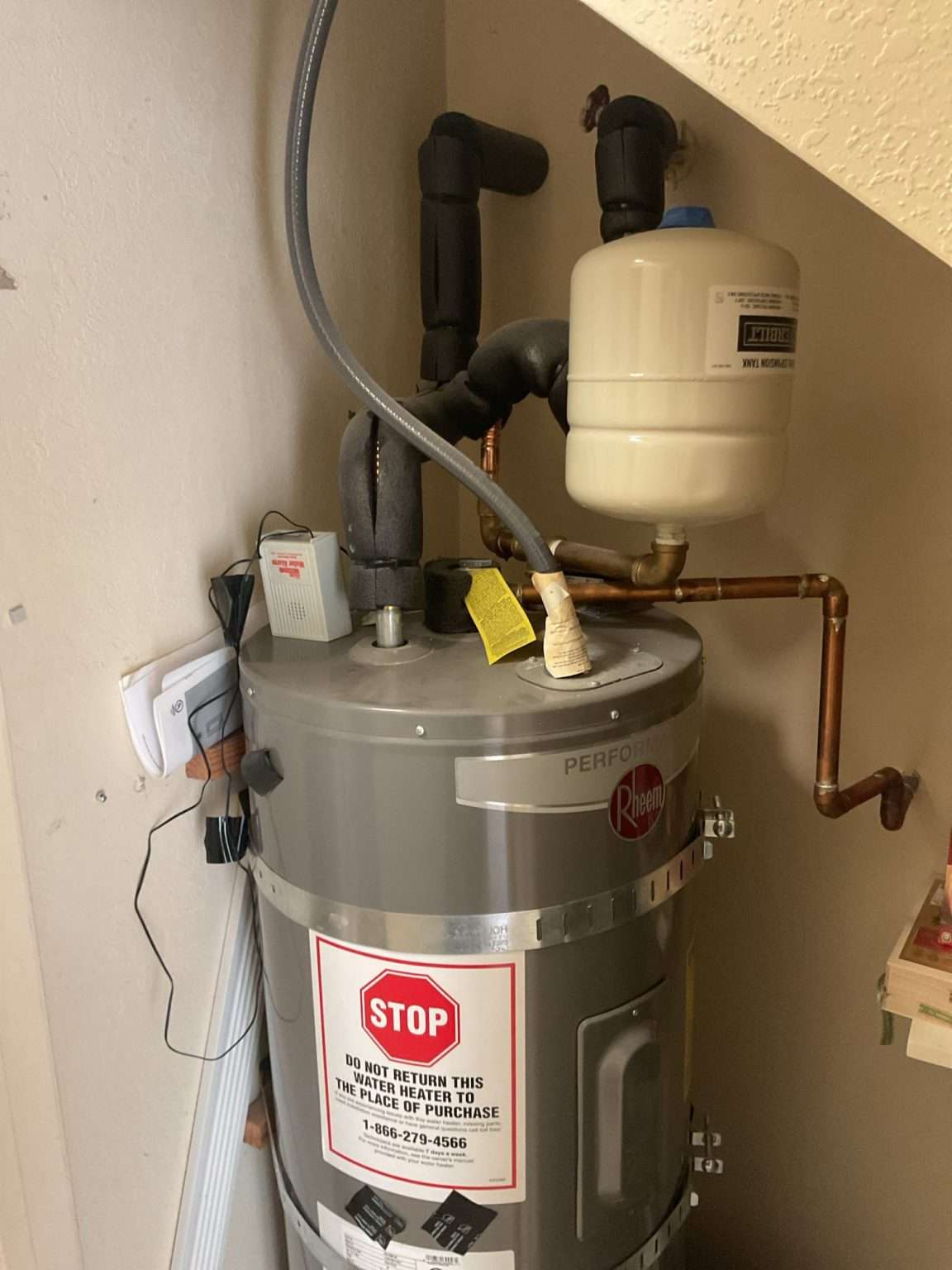

Your water heater stops working. Again. The third time in two years, and you’re staring at another repair bill while your morning shower runs cold. You’ve got the certifications, the technology, the five-star reviews – but that 50-gallon tank in your garage keeps letting you down.
I know this because Bay Area homeowners call Bellows every week with the same frustration. They’ve done everything right, maintained their traditional tank water heater religiously, yet still face unexpected failures and mounting utility costs. What they don’t realize is that the technology itself creates the problem.
Tankless water heaters eliminate the reliability issues and energy waste built into storage tank systems. But here’s what matters for San Francisco Bay Area homeowners in 2026: California’s zero-NOx regulations take effect in 2027, PG&E rates make energy efficiency critical, and retrofit installations require specific Bay Area building code compliance. This guide covers the genuine pros and cons of tankless systems, the honest cost-versus-savings calculation for our region, and what you need to know before the 2027 BAAQMD deadline changes your options.
What Is a Tankless Water Heater?
Storage tank water heaters maintain 40-80 gallons of heated water 24/7, whether you need hot water or not. Tankless water heaters heat water only when you open a hot water tap – like the difference between leaving your car idling all day versus starting it only when you need to drive.
How tankless water heaters work:
- You turn on a hot water tap
- Cold water flows into the tankless unit
- Gas burners or electric elements activate instantly
- Water heats as it passes through the heat exchanger
- Hot water (120°F) arrives at your tap
- When you close the tap, the unit shuts off completely
This on-demand approach eliminates standby energy loss – the 10-20% of your water heating bill that storage tanks waste just maintaining temperature.
Gas vs Electric Tankless: Quick Comparison
| Feature | Gas Tankless | Electric Tankless |
|---|---|---|
| Flow Rate | 5-10 GPM (whole-home capable) | 2-5 GPM (point-of-use best) |
| Installation Cost | $7,000-$12,000 (gas line + venting) | $4,000-$8,000 (electrical work) |
| Operating Cost | $330-$510/year (natural gas) | $450-$750/year (PG&E electric) |
| Best For | Whole-home hot water, multiple fixtures | Single bathroom, remote fixtures |
| BAAQMD Deadline | Legal until 2031 | Compliant indefinitely |
Bay Area groundwater advantage: Our 55-60°F year-round groundwater temperature means tankless units need only a 60-65°F temperature rise (versus 80°F in northern states). This gives Bay Area installations roughly 15-20% better effective flow rates than manufacturer specifications suggest.
The 7 Proven Benefits of Tankless Water Heaters
1. Energy Efficiency That Actually Reduces Utility Bills
Department of Energy efficiency data:
- 24-34% more efficient than storage tanks for households using 41 gallons or less daily
- 8-14% more efficient for homes using 100+ gallons daily
- Zero standby loss – no energy wasted maintaining stored water temperature
- Energy Factor 0.90-0.96 for ENERGY STAR gas tankless (vs 0.67 for storage tanks)
Bay Area annual savings:
| System Type | Annual Energy Cost | Savings vs Tank |
|---|---|---|
| Gas Storage Tank | $500-$750 | Baseline |
| Gas Tankless | $330-$510 | $95-$180/year |
At PG&E’s current rates ($0.38-$0.47/kWh for electric, ~$2.50-$3.00/therm for gas), that efficiency difference compounds over the unit’s 20+ year lifespan.
2. Unlimited Hot Water Supply – With One Critical Limitation
What “unlimited” actually means:
- Sequential use: Truly unlimited – Your teenager can take a 45-minute shower without depleting hot water for the next person
- Simultaneous use: Flow rate limited – Two showers (5 GPM) + dishwasher (1.5 GPM) = 6.5 GPM total demand approaches most units’ limits
- Temperature maintained – As long as you stay within GPM capacity, temperature stays consistent
- No recovery time – Unlike storage tanks that need 45-60 minutes to reheat, tankless recovers instantly
Bay Area sizing advantage: A household running two showers simultaneously (5 GPM) in 58°F groundwater needs roughly 140,000 BTU gas tankless capacity. That same household in Minnesota (40°F groundwater) would need 180,000+ BTU for the same performance.
3. 20+ Year Lifespan Versus 10-15 for Storage Tanks
Lifespan comparison:
| Water Heater Type | Expected Lifespan | Replacement Cost | 25-Year Total Cost |
|---|---|---|---|
| Storage Tank | 10-15 years | $2,500-$4,000 | $7,500-$12,000 (3 replacements) |
| Gas Tankless | 20-25 years | $7,000-$12,000 | $7,000-$12,000 (1 installation) |
The maintenance requirement: That 20-25 year lifespan requires annual descaling ($150-300/year) to prevent mineral buildup. Bay Area water hardness varies:
- Soft water areas (3-7 grains/gallon): Santa Cruz, Monterey – annual descaling adequate
- Hard water areas (15-25+ grains/gallon): San Jose, Peninsula – annual descaling critical
- Skip maintenance: Expect 12-15 year lifespan instead of 20-25 years
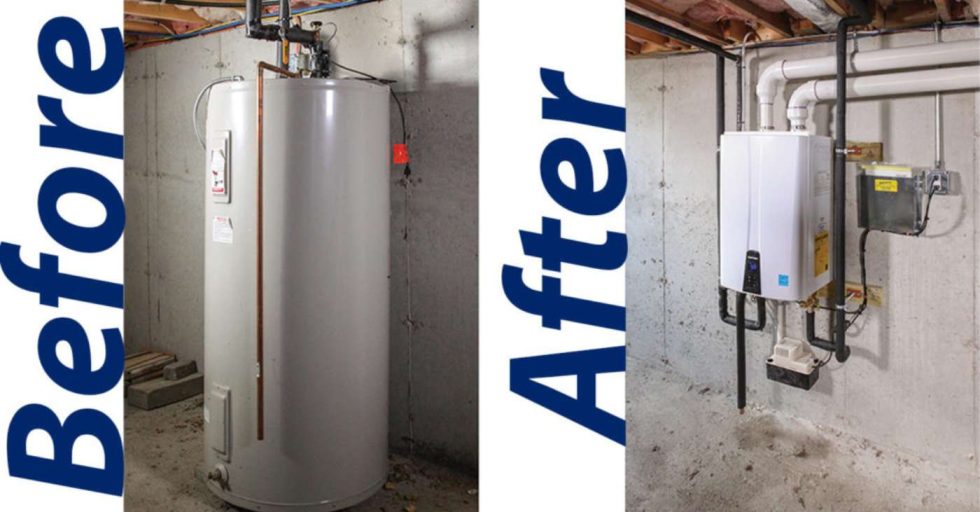
4. Massive Space Savings for Bay Area Homes
Physical footprint comparison:
| Water Heater Type | Floor Space | Height | Weight (full) |
|---|---|---|---|
| 50-Gallon Tank | 16-20 sq ft | 4-5 feet | 450+ pounds |
| Tankless (wall-mounted) | ~3 sq ft wall space | 28″ x 20″ x 10″ | 50-80 pounds |
Real-world Bay Area value: In Peninsula homes where every square foot matters, reclaiming 16-20 square feet of floor space creates actual utility. Wall-mounting also eliminates floor-level flood risk – tankless units contain less than one gallon of water versus 40-80 gallons ready to dump on your floor.
5. Lower Risk of Catastrophic Water Damage
Tank failure statistics:
- Average water damage cost: $4,444 per insurance claim
- Tank contents: 40-80 gallons released in minutes when tank corrodes through
- Common failure locations: Garage near vehicles, above finished space, near stored items
- No warning: Corroded tanks rupture without advance notice
Tankless leak profile:
- Maximum water content: Less than 1 gallon at any moment
- Leak rate if failure occurs: Limited to ~1 GPM until water supply shut off
- Wall-mounted position: Above typical flood levels
- Damage comparison: Mopping up a puddle vs calling water damage restoration
6. Environmental Impact Through Reduced Energy Consumption
Annual environmental savings per household:
- CO2 emissions avoided: 1,500-2,000 pounds/year with gas systems
- Electricity reduction: 1,200-1,800 kWh/year with electric systems
- Equivalent impact: Taking your car off the road for 1,500-2,000 miles annually
- Water heating percentage: Approximately 18% of total home energy use
California’s regulatory direction: BAAQMD Rule 9-6 bans gas storage tanks under 75,000 BTU after January 1, 2027. Gas tankless units (typically 140,000-199,000 BTU) remain legal until January 1, 2031. The timeline signals clear policy preference for electrification.
7. No Standby Heat Loss Creates Consistent Efficiency
Why storage tanks lose efficiency over time:
- Sediment accumulation in tank bottom reduces heat transfer
- Insulation degradation increases heat loss through walls
- Anode rod depletion accelerates tank corrosion
- Continuous standby loss through tank walls and flue even when perfectly maintained
- Result: 15-year-old tank operates 20-30% below original efficiency rating
Why tankless maintains efficiency:
- No stored water means no standby heat loss
- No sediment buildup in a storage tank (because there is no tank)
- Annual descaling prevents heat exchanger mineral deposits
- Result: 15-year-old tankless still performs at original Energy Factor rating
The 5 Honest Downsides of Tankless Water Heaters
Tankless water heaters solve real problems with storage tanks, but they create different challenges. Here’s what Bay Area homeowners need to understand before committing to a $7,000-$12,000 installation.
1. Higher Upfront Installation Costs ($7,000-$12,000 in Bay Area)
Complete cost breakdown for Bay Area tankless installation:
| Installation Component | Cost Range | Why It Costs More |
|---|---|---|
| Tankless Unit | $1,200-$2,500 | More complex than tank heater |
| Gas Line Upgrade (3/4″) | $1,500-$3,000 | 150,000-199,000 BTU demand requires larger line |
| Specialized Venting | $500-$1,500 | Direct-vent or PVC high-efficiency venting |
| Electrical Work | $300-$800 | Control board, igniter, fan require dedicated circuits |
| Permits & Inspections | $400-$800 | Gas line sizing, venting, seismic restraints |
| Labor (6-10 hours) | $900-$2,000 | $150-$200/hr Bay Area rates, complex install |
| TOTAL | $7,000-$12,000 | 30% above national average due to Bay Area labor/permits |
For comparison: Storage tank replacement in Bay Area = $2,500-$4,000 (3-4 hour install, no gas line upgrade needed).
2. Flow Rate Limitations During Simultaneous Use
Typical fixture flow rates:
| Fixture/Appliance | GPM Demand |
|---|---|
| Standard Showerhead | 2.0-2.5 GPM |
| Low-Flow Showerhead | 1.5 GPM |
| Kitchen Faucet | 1.5-2.0 GPM |
| Bathroom Faucet | 1.0 GPM |
| Dishwasher | 1.0-1.5 GPM |
| Washing Machine | 2.0-3.0 GPM |
Real-world simultaneous demand example:
- Two people showering (2.5 GPM each) = 5.0 GPM
- Dishwasher running = 1.5 GPM
- Total demand: 6.5 GPM
Bay Area tankless capacity at 65°F temperature rise:
- Mid-range gas unit (Navien NPE-240): 6.5-7.5 GPM effective capacity
- Result with 6.5 GPM demand: Water stays hot, but flow pressure drops at each fixture
- Electric whole-home tankless: 3-4 GPM maximum (enough for ONE shower OR shower + sink, not two showers)
Solutions (none ideal):
- Install larger gas unit – More expensive, may require additional gas line work
- Add second tankless unit – Much more expensive, separate zones for different areas
- Accept limitations – Stagger household hot water use during peak times
3. The Cold Water Sandwich Effect
What happens when you turn on tankless hot water:
- Warm water (2-3 seconds): Residual hot water in pipes reaches your tap
- Cold burst (3-5 seconds): Tankless unit activates, cold water flows through while burner reaches temperature
- Hot water (continuous): Once at temperature, stable hot water delivery
When it’s most noticeable:
- Short hot water draws: Washing hands, filling a cup, rinsing one dish – unit activates but you shut it off before reaching temperature
- Showers: Experience cold sandwich once at startup, then stable temperature throughout
- Quick on/off cycles: Each time you turn hot water on after it’s been off
Solutions:
- Install recirculation system or buffer tank: Adds $800-$1,500 to installation cost, eliminates cold sandwich
- Learn to expect it: Most homeowners adapt by starting showers at lower temperature, then adjusting up after activation
- Point-of-use units: Smaller tankless units at individual fixtures eliminate pipe residual water issue
4. Annual Maintenance Requirements ($150-$300/year)
Why annual descaling is mandatory:
- Mineral buildup in heat exchanger restricts water flow and reduces heat transfer
- Manufacturers void warranties if you skip annual maintenance
- Efficiency loss: 2-3 years without descaling = noticeably inconsistent temperature
- Premature failure: Scaled heat exchanger replacement costs $600-$1,200 (far more than annual maintenance)
Bay Area water hardness by location:
| Bay Area Region | Water Hardness | Descaling Frequency |
|---|---|---|
| Santa Cruz, Monterey | 3-7 grains/gallon (soft) | Annual adequate |
| San Jose, Peninsula, Inland | 15-25+ grains/gallon (hard) | Annual critical, sometimes 6-month |
What professional descaling involves:
- Isolate the tankless unit from water supply
- Connect pump and bucket with descaling solution
- Circulate solution through heat exchanger (45-60 minutes)
- Flush with clean water
- Test operation and temperature output
- Cost: $150-$300 depending on location and unit complexity
For comparison: Storage tanks need anode rod replacement every 3-5 years ($150-$250) and occasional flushing, but are more forgiving of neglect. Tankless units aren’t.
5. No Hot Water During Power Outages
Why gas tankless units don’t work without electricity:
- Digital control board requires power to operate
- Electronic igniter needs electricity to light burner
- Exhaust fan must run for proper venting (safety requirement)
- Result: No electricity = no hot water, even though it’s gas-fired
Power outage scenarios in Bay Area:
- PG&E Public Safety Power Shutoffs (PSPS): Increasingly common during fire season
- Winter storm outages: Can last hours to days
- With well pump: No water at all during outage
- With city water: Cold water only
Solutions:
| Solution | Cost | Runtime |
|---|---|---|
| Battery Backup System | $300-$600 | Several hours |
| Whole-Home Generator Circuit | Varies (if generator already installed) | As long as generator runs |
| Do Nothing | $0 | No hot water during outages |
Many homeowners don’t consider power outage vulnerability until experiencing their first PSPS event with no hot shower available.
Tankless vs Tank vs Heat Pump Water Heater: Side-by-Side Comparison
Bay Area homeowners face three primary water heating technologies in 2026. Each has distinct advantages depending on your home’s infrastructure, budget, and priorities. This comparison uses Bay Area-specific costs and conditions.
| Factor | Gas Tankless | Storage Tank (Gas) | Heat Pump |
|---|---|---|---|
| Installation Cost (Bay Area) | $7,000 – $12,000 | $2,500 – $4,000 | $4,500 – $7,500 |
| Expected Lifespan | 20-25 years | 10-15 years | 15-20 years |
| Energy Efficiency | 24-34% more efficient than tank | Baseline (EF 0.67) | 200-300% more efficient than tank |
| Annual Energy Cost (typical Bay Area home) | $330 – $510 | $500 – $750 | $180 – $300 |
| Space Required | Wall-mounted, ~3 sq ft | 16-20 sq ft floor space | 16-20 sq ft floor space |
| Hot Water Capacity | Continuous (6-10 GPM) | 40-80 gallons stored | 50-80 gallons stored |
| Recovery Time | Instant (on-demand) | 45-60 minutes | 2-4 hours |
| Annual Maintenance Cost | $150 – $300 (descaling required) | $50 – $150 (minimal) | $100 – $200 (filter cleaning) |
| Power Outage Operation | No (requires electricity for controls) | Maybe (older pilots work, newer don’t) | No (electric only) |
| BAAQMD Compliance | Legal until 2031 | Banned after 2027 | Fully compliant (zero-NOx) |
| Available Rebates (2026) | Limited (federal expired) | None | $675 to $5,500 depending on your supplier |
| Best For | Homes with adequate gas service, space constraints, sequential hot water use | Budget replacements, low hot water demand, simple installations | Maximum efficiency, available rebates, electrification goals, adequate space |
No single technology wins across all categories. The right choice depends on your specific situation – electrical panel capacity, available installation space, hot water demand patterns, budget constraints, and timeline.
When Tankless Makes the Most Sense
Tankless water heaters deliver the strongest value proposition for Bay Area homeowners who:
- Have space constraints – Peninsula homes, condos, and properties where every square foot matters benefit from wall-mounted tankless units that free up 16-20 square feet of floor space
- Use hot water sequentially – Households where people shower at different times, rather than simultaneously, avoid the flow rate limitations that challenge tankless systems
- Have adequate gas service – Homes with 3/4″ gas lines already run to the water heater location, or where running new gas line is straightforward
- Plan long-term ownership – The 20-25 year lifespan justifies the higher upfront cost for homeowners planning to stay 10+ years
- Want to avoid tank failure risk – Homes where a storage tank sits above finished space, near vehicles, or where a catastrophic leak would cause expensive damage
- Need immediate 2027 compliance solution – Homeowners replacing water heaters now who want gas but face the 2027 storage tank ban
What Bay Area Homeowners Need to Know About Tankless Water Heaters
BAAQMD Zero-NOx Regulations (2027 and 2031 Deadlines)
The Bay Area Air Quality Management District adopted Rule 9-6 in March 2023, fundamentally reshaping the water heater market for the nine-county region.
What changes and when:
| Effective Date | What Gets Banned | What Remains Legal |
|---|---|---|
| January 1, 2027 | Gas storage tank water heaters under 75,000 BTU (virtually all residential tanks) | Gas tankless (140,000-199,000 BTU), Electric resistance, Heat pumps |
| January 1, 2031 | ALL gas-fired water heating appliances | Electric resistance, Heat pumps (zero-NOx compliant) |
Affected counties: Alameda, Contra Costa, Marin, Napa, San Francisco, San Mateo, Santa Clara, southwestern Solano, southern Sonoma
Current market reality: No gas-fired water heating appliance on the market meets zero-NOx standards. The technology doesn’t exist yet in residential applications. California’s regulatory trajectory clearly favors electrification.
Strategic decision for 2026:
- Option 1: Install gas tankless now, get 7 years of use before 2031 transition
- Option 2: Go electric now, capture available rebates, avoid forced conversion later
- Decision factors: Home’s electrical capacity, budget, planning timeline, willingness to face another replacement in 2031
California Building Code and Permit Requirements
Every water heater installation in California requires a permit. California Plumbing Code Section 507 governs installations with requirements that differ from national code.
All water heaters must have:
- Earthquake strapping: Two straps minimum (upper and lower third), lag screws into studs
- TPR valve and discharge piping: Terminating within 6 inches of floor
- Thermal expansion tank: Required on all closed-loop systems
- Gas shut-off valve: Within 6 feet of appliance
- Insulation: First 5 feet of hot and cold water lines
Tankless-specific additional requirements:
- Gas line sizing calculations: Must be submitted with permit application
- Condensate drain: High-efficiency units produce acidic condensate requiring proper disposal
- Combustion air and ventilation calculations: Required for indoor installations
- Seismic restraint calculations: Wall-mounted equipment requires engineered mounting
San Jose Building Bulletin #290 specifically governs tankless installations. Other Bay Area cities have similar requirements even if not formally codified.
PG&E Rate Structure and Energy Cost Calculations
Current PG&E rates (2026):
- Electric: $0.38-$0.47/kWh (among highest in continental US)
- Natural gas: ~$2.50-$3.00/therm (decreased 3% January 2026, remains volatile)
Annual water heating costs – Bay Area household:
| System Type | Energy Consumption | Annual Cost | Annual Savings |
|---|---|---|---|
| Gas Storage Tank | 200-250 therms | $500-$750 | Baseline |
| Gas Tankless | 132-190 therms | $330-$510 | $95-$180/year |
Why energy savings alone don’t justify tankless:
- Low-end scenario: $95/year savings ÷ $7,000 install = 74-year payback
- High-end scenario: $180/year savings ÷ $12,000 install = 67-year payback
- Energy savings alone: Not compelling
Where tankless economics actually work:
- Avoided replacements: 20-25 year lifespan avoids 2 future tank replacements at $3,000-$4,000 each
- Risk mitigation: Avoiding catastrophic tank failure (average $4,444 water damage claim)
- Space value: Reclaiming 16-20 square feet in Bay Area homes where space commands premium
- Combined value: Energy savings + longevity + risk avoidance + space = defensible ROI
California Rebates and Incentives for Tankless Water Heaters
The 2026 incentive landscape heavily favors electrification over gas efficiency improvements.
Current Bay Area rebates:
There is no single Bay Area rebate. What you can claim depends on which utility or community choice aggregator supplies your electricity, and the spread between the best and worst address is wide.
| Who supplies your electricity | Gas Tankless | Heat Pump Water Heater |
|---|---|---|
| Silicon Valley Power (City of Santa Clara only) | $0 | $5,500 converting from gas |
| WestLight Energy (San Mateo County) | $0 | $3,500 replacing a gas water heater |
| Silicon Valley Clean Energy | $0 | $2,500 replacing gas, or $3,500 income qualified |
| Central Coast Community Energy | $0 | $1,000, or $1,250 income qualified |
| MCE (Marin County) | $0 | up to $675 |
| Federal 25C Tax Credit | Expired 12/31/25 | Expired 12/31/25 |
Two programs that used to appear in tables like this one have gone. BayREN’s heat pump water heater rebate ended in April 2024, and TECH Clean California has been fully reserved since November 2025.
Real out-of-pocket cost comparison:
- Gas tankless: $7,000-$12,000 installation with no rebate anywhere on this list, so $7,000-$12,000 out of pocket
- Heat pump water heater: $6,500-$7,500 installation, less whatever your own supplier pays. In the City of Santa Clara that is $5,500, in San Mateo County $3,500, in SVCE territory $2,500, on the Central Coast $1,000, in Marin $675. The same job can land very differently three streets away, which is why the first thing to settle is who sends your electricity bill.
Two things worth knowing about the SVCE figure. Several Santa Clara County cities add their own money on top: Milpitas adds $850, Mountain View adds $2,000 replacing gas, and Sunnyvale adds on HVAC rather than water heating. Separately, SVCE is running a limited-time extra $500 on gas to heat pump water heater conversions through October 2026, which takes that rebate to $3,000 at the standard tier. Check whether it is still open before you count on it.
You may also still find an older SVCE figure quoted elsewhere, an “up to $8,750” project cap with an extra “$4,250” for income qualified households. SVCE’s current rebate page states neither. It publishes the per appliance amounts above instead.
The direction of travel still favors electrification, but the federal layer that used to sit on top of these rebates is gone for both sides of this comparison. For a detailed head to head, see our tankless versus heat pump guide, or the current picture by supplier in our 2026 California rebate guide. Rebate figures last reviewed 1 October 2026.
How to Size a Tankless Water Heater for Your Bay Area Home
Proper sizing prevents lukewarm showers during peak demand. Here’s the calculation framework.
Step 1: List all fixtures/appliances and their GPM demands
| Fixture/Appliance | GPM Demand |
|---|---|
| Standard Shower | 2.5 GPM |
| Low-Flow Shower | 1.5 GPM |
| Kitchen Faucet | 2.0 GPM |
| Bathroom Faucet | 1.0 GPM |
| Dishwasher | 1.5 GPM |
| Washing Machine | 2.5 GPM |
Step 2: Calculate maximum simultaneous demand
Example household peak usage:
- Two people showering (2.5 GPM × 2) = 5.0 GPM
- Dishwasher running = 1.5 GPM
- Total simultaneous demand: 6.5 GPM
Step 3: Factor in Bay Area groundwater temperature
- Bay Area groundwater: 55-60°F
- Desired output temperature: 120°F
- Required temperature rise: 60-65°F
Step 4: Match demand to unit capacity
| Unit Type | BTU Rating | Bay Area Effective GPM (65°F rise) | Suitable For |
|---|---|---|---|
| Small Gas Tankless | 140,000 BTU | ~5.5 GPM | 1-2 bedroom, sequential use |
| Mid-Range Gas Tankless | 180,000-199,000 BTU | ~6.5-7.5 GPM | Most Bay Area homes, 2 simultaneous showers |
| Large Gas Tankless | 240,000+ BTU | ~9-10 GPM | 3+ bath homes, high simultaneous demand |
| Electric Whole-Home | 100-150 amp draw | ~3-4 GPM | 1 shower OR shower + sink only |
Bay Area advantage recap: Our 55-60°F groundwater requires only 60-65°F temperature rise versus 80°F in northern states. This gives us roughly 15-20% better effective flow rates from the same unit.
Popular Bay Area models: Navien NPE-240 (199,000 BTU), Rinnai RU199 (199,000 BTU), Noritz NRC111 (180,000 BTU)
Tankless vs Heat Pump Water Heaters: Which Is Right for You?
This decision increasingly matters for Bay Area homeowners given California’s regulatory and incentive structure.
Quick comparison:
| Factor | Tankless | Heat Pump |
|---|---|---|
| Technology | On-demand heating, no storage | Storage tank, extracts heat from air |
| Space Requirements | Wall-mounted, 3 sq ft | Floor space, 16-20 sq ft |
| Installation Cost | $7,000-$12,000 | $4,500-$7,500 |
| Available Rebates | $0 (federal expired) | $675 to $5,500 by supplier |
| Efficiency | 24-34% better than tank | 200-300% better than tank |
| Hot Water Supply | Continuous (if within GPM limit) | 50-80 gallon capacity |
| Recovery Time | Instant | 2-4 hours |
| 2031 Compliance | Gas banned in 2031 | Compliant indefinitely |
Heat pumps win on: Efficiency, rebates, long-term regulatory compliance, lowest operating costs
Tankless wins on: Space savings, continuous hot water, instant recovery, no wait time
Decision usually comes down to: Available space. Homes with adequate floor space benefit from heat pump efficiency and rebates. Homes where space is premium benefit from tankless wall-mounting.
For detailed analysis including real Bay Area costs and which homes benefit most from each technology, see our complete comparison guide.
Frequently Asked Questions About Tankless Water Heaters
How does a tankless water heater work?
Tankless water heaters heat water on-demand as it flows through the unit. When you turn on a hot water tap, cold water enters the tankless heater and flows across a heat exchanger. Gas burners or electric heating elements activate instantly, raising the water temperature to your preset level (typically 120°F). The heated water flows directly to your tap. When you close the tap, the unit shuts off completely. This eliminates the standby energy loss that storage tanks create by maintaining heated water 24/7.
Are tankless water heaters worth it?
Tankless water heaters are worth the investment for Bay Area homeowners who value space savings, 20+ year lifespan, and continuous hot water supply – and who can justify the $7,000-$12,000 installation cost. The annual energy savings ($95-$180/year) don’t create a compelling payback period alone. The value proposition comes from avoiding two future tank replacements over a 20-year period, eliminating catastrophic tank failure risk, and reclaiming 16-20 square feet of space. Tankless makes less sense for households needing high simultaneous hot water flow or budget-constrained replacements where upfront cost is the primary concern.
What size tankless water heater do I need for my Bay Area home?
Size tankless water heaters based on total simultaneous GPM demand. Calculate your peak usage: standard showerheads use 2.0-2.5 GPM, washing machines use 2.0-3.0 GPM, dishwashers use 1.0-1.5 GPM. Add up your maximum simultaneous use – for example, two showers (5 GPM) plus dishwasher (1.5 GPM) equals 6.5 GPM total demand. Bay Area groundwater runs 55-60°F, requiring a 60-65°F temperature rise to reach 120°F output. For 6.5 GPM at 65°F rise, you need approximately 140,000 BTU gas capacity. Most Bay Area homes use whole-home units rated 180,000-199,000 BTU.
How much does a tankless water heater cost to install in the Bay Area?
Tankless water heater installation in the San Francisco Bay Area costs $7,000-$12,000 for a complete system. This includes the unit itself ($1,200-$2,500), gas line upgrades ($1,500-$3,000 for 3/4″ line), specialized venting ($500-$1,500), electrical work for controls ($300-$800), permits and inspections ($400-$800), and labor at $150-$200/hour for 6-10 hours. Bay Area costs run approximately 30% above national averages due to higher labor rates, stricter permitting requirements, and seismic safety code compliance.
Do tankless water heaters really save money?
Tankless water heaters save $95-$180 annually on energy costs for typical Bay Area households compared to storage tank water heaters. The Department of Energy reports 24-34% efficiency gains for homes using under 41 gallons daily, and 8-14% savings for homes using 100+ gallons daily. However, the $7,000-$12,000 installation cost means energy savings alone don’t create an attractive payback period. The real financial value comes from the 20-25 year lifespan (versus 10-15 for tanks), avoiding future replacement costs, and eliminating risk of catastrophic tank failure water damage.
What is the cold water sandwich effect?
The cold water sandwich effect occurs when you turn on a tankless water heater and experience warm water (from residual hot water in pipes), then a brief cold burst (3-5 seconds while the unit activates), then consistent hot water. The effect happens because tankless burners or heating elements need 2-4 seconds to reach full operating temperature. During activation, cold water flows through the heat exchanger. It’s most noticeable during short hot water draws. Solutions include installing a recirculation system or buffer tank ($800-$1,500), or simply learning to expect the brief cold burst at startup.
Can a tankless water heater supply multiple showers simultaneously?
Tankless water heaters can supply multiple showers simultaneously if total GPM demand stays within the unit’s capacity at your required temperature rise. Two standard showerheads (2.5 GPM each) demand 5 GPM total. In the Bay Area’s 55-60°F groundwater requiring a 60-65°F rise, a mid-range gas tankless unit can maintain temperature for two simultaneous showers. Add a dishwasher or washing machine during peak use, and you approach or exceed capacity. Electric tankless units struggle with even two simultaneous showers. Solutions include installing a larger gas unit, adding a second tankless unit, or staggering household hot water use.
How long do tankless water heaters last?
Tankless water heaters last 20-25 years with proper annual maintenance, significantly longer than storage tank water heaters which last 10-15 years. The extended lifespan exists because tankless units have no storage tank to corrode. However, this longevity requires annual descaling to prevent mineral buildup in the heat exchanger. Bay Area homes with hard water (San Jose, Peninsula areas) must descale annually or face efficiency loss and premature failure. Skip annual maintenance and expect 12-15 year lifespan instead of 20+.
Do tankless water heaters work during power outages?
Tankless water heaters do not work during power outages even when gas-fired. Gas tankless units require electricity to run the digital control board, electronic igniter, and exhaust fan. During PG&E public safety power shutoffs or storm outages, tankless water heaters stop functioning completely. Solutions include installing a battery backup system ($300-$600) or connecting the tankless unit to your whole-home generator circuit.
What’s the difference between tankless and heat pump water heaters?
Tankless water heaters heat water on-demand using gas burners or electric elements, eliminating storage tanks entirely. Heat pump water heaters use storage tanks but heat the water by extracting heat from surrounding air rather than directly burning fuel. Tankless units offer space savings through wall-mounting and continuous hot water but cost $7,000-$12,000 to install. Heat pumps deliver 200-300% efficiency and qualify for up to $8,750 in Bay Area rebates but require 16-20 square feet of floor space and have 2-4 hour recovery times. Heat pumps align with California’s zero-NOx regulations and electrification goals.
Ready to Upgrade to Tankless? Here’s What Bellows Offers
Bellows Plumbing, Heating, Cooling & Electrical has installed over 500 tankless water heaters across the San Francisco Bay Area. We handle the complete process – from sizing calculations and permit applications to gas line upgrades, specialized venting, and seismic safety compliance.
Our Bay Area expertise includes:
- Building code knowledge: BAAQMD regulations, county-specific permit requirements, California Plumbing Code Section 507
- Accurate sizing: Based on your actual household demand patterns, not square footage guesses
- Honest guidance: We explain pros and cons of tankless versus heat pump options so you make informed decisions
- Complete installations: Gas line upgrades, specialized venting, electrical work, earthquake strapping, permits
See how we installed a high-efficiency Navien tankless system in a Santa Cruz home, including the gas line upgrade, earthquake strapping, and permit process.
Ready to explore whether tankless makes sense for your home?
- Free consultation with sizing calculations
- Comparison of tankless vs heat pump options
- Current rebate qualification review
- Honest recommendations based on your specific needs
Call us at 877-477-7151 or request service online.
Bellows serves Santa Cruz, Santa Clara, San Mateo, Monterey, Marin, Napa, and Sonoma counties.