

Your air conditioner runs constantly but can’t get your home below 75 degrees. You hear grinding noises from the outdoor unit. Water pools under your indoor system, or ice coats the copper lines running to your condenser. These aren’t minor issues you can ignore or quick fixes you should attempt yourself – they’re warning signs that you have serious AC problems in your Bay Area home. Your system is failing in ways that require immediate professional diagnosis.
I know this because the AC problems Bay Area homeowners call about follow predictable patterns. They notice symptoms weeks before calling for service, assume the issues will resolve themselves, then face emergency repairs during heat waves when their system finally quits completely.
The difference between an affordable repair and an emergency replacement often comes down to how quickly you act when AC problems first appear. Understanding what these warning signs mean, and why Bay Area AC problems require specialized diagnosis, helps you avoid the costly failures that occur when a system is pushed past its limits.
Here’s what those early symptoms actually tell you about your system, why they indicate deeper issues, and why calling Bellows Plumbing, Heating, Cooling & Electrical at the first sign of AC problems is the smartest decision for Bay Area homeowners.
Your AC Is Telling You It Has Problems: Here’s What The Signs Mean
Air conditioning systems don’t fail suddenly. They give you weeks of warning through specific symptoms that homeowners often dismiss as normal aging or seasonal stress. Understanding what these signs actually indicate helps you recognize when your system needs professional attention before it stops working entirely.
Weak airflow from your vents, for example, is one of the most common AC problems and can signal anything from ductwork restrictions to a failing blower motor to refrigerant issues affecting system pressure. Each of these problems requires different repairs, and proper diagnosis demands professional tools most homeowners don’t have. Measuring airflow, checking static pressure, and testing motor amperage is essential to determining whether the issue is small or a sign of more serious AC problems already forming.
Ice buildup anywhere on your system is another red flag that AC problems are occurring. Ice on indoor coils, outdoor refrigerant lines, or line connections usually indicates airflow blockages or refrigerant-related issues—both of which can cause expensive compressor failure if ignored. This is especially problematic in Bay Area households, where temperature swings and humidity fluctuations create conditions that accelerate icing and mechanical stress.
Strange noises are another clear sign of worsening AC problems. Grinding sounds from the outdoor unit mean bearing wear in the condenser fan motor or compressor. Squealing from the indoor unit indicates blower motor problems or belt issues. Banging suggests something has come loose and is striking fan blades with each rotation. Running a system making these noises accelerates damage – the failing component destroys itself faster and often damages surrounding parts in the process.
Water leaks inside your home indicate clogged condensate drains – but also potentially cracked drain pans, disconnected drainage lines, or frozen coils that are melting and overwhelming your drainage system. While you might clear a simple drain clog, persistent drainage problems require professional diagnosis to identify whether the clog is a symptom of bigger airflow or refrigerant issues causing excessive condensation.
Electrical issues manifest as tripped breakers, burning smells, or systems that won’t start despite having power. These aren’t problems to troubleshoot yourself. AC systems use high voltage that can injure or kill, and electrical problems often indicate failing capacitors, contactors, or compressor issues that need specialized testing to diagnose correctly.
Bay Area homes face additional stress factors. Marine air from coastal locations accelerates corrosion on outdoor units and electrical connections. Temperature swings between cool mornings and hot afternoons force your system through more on-off cycles than homes in stable climates experience. Microclimates mean your system in San Jose works much harder than your neighbor’s system three blocks away where mature trees provide shade and fog lingers longer.
These symptoms require professional attention because proper diagnosis reveals root causes, not just obvious symptoms. What looks like a simple airflow problem might actually be refrigerant loss causing ice formation that blocks airflow. What seems like an electrical issue could be a failing compressor drawing too much current and tripping your breaker. Getting the diagnosis right the first time prevents paying for repairs that don’t fix the actual problem.
Why AC Problems in Bay Area Homes Get Expensive Fast
Air conditioning failures cascade. One component breaking forces other parts to work harder, which accelerates their failure, which damages additional components. This cascade effect turns what could have been a straightforward repair into a system replacement if you wait too long to get professional service.
Consider refrigerant loss – one of the most common AC problems Bay Area technicians diagnose. A small leak that develops in March loses refrigerant gradually. By July, your system runs low enough that the evaporator coil freezes. Ice blocks airflow, forcing your blower motor to work harder. The motor overheats from the strain. Meanwhile, low refrigerant makes your compressor run continuously trying to reach the temperature you’ve set. Extended run times at low refrigerant levels overheat the compressor – the most expensive component in your system.
At this point you have four problems: the original refrigerant leak, a frozen coil, a stressed blower motor, and a compressor operating under damaging conditions. Fix the leak in March and you pay for leak repair plus refrigerant recharge. Wait until July and you might need compressor replacement on top of the leak repair. The difference in expense is substantial.
Bay Area conditions accelerate this damage progression. Coastal homes deal with salt air that corrodes aluminum fins on condenser coils and eats through copper refrigerant lines. What starts as surface corrosion becomes pinhole leaks within a year or two in Santa Cruz and San Francisco properties near the ocean. Inland homes in San Jose and Santa Clara face different problems – extreme temperature swings stress expansion joints and connections where refrigerant lines enter the compressor.
Humidity from marine air creates its own issues. Higher moisture levels mean more condensation forming in your AC system. More condensation means more algae growth in drain lines, more strain on condensate pumps, and faster corrosion of drain pans. A drainage problem that’s minor in dry climates becomes a recurring issue in Bay Area homes that needs professional attention to solve permanently.
Attempting repairs yourself compounds these problems. Adding refrigerant without first finding and fixing the leak means you’ll lose that refrigerant and waste the money you spent on it. Worse, adding refrigerant without proper vacuum pumps introduces moisture and air into your system – moisture that freezes in expansion valves and air that creates pressure problems damaging your compressor. Professional service includes leak detection, proper evacuation procedures, and precise refrigerant charging that protects your equipment.
Electrical repairs attempted by homeowners often create fire hazards. AC systems use capacitors that store deadly voltage even when the system is off. Wiring mistakes cause shorts that trip breakers repeatedly or overheat connections until they fail catastrophically. Bypassing safety switches to get your system running removes protection systems designed to prevent equipment damage and house fires.
The cost difference between early professional service and delayed emergency repairs is substantial. A capacitor replacement during a scheduled service call is straightforward. The same capacitor failing during a heat wave requires emergency service rates plus potential damage to the compressor that was trying to start without a functioning capacitor. Add the expense of hotel rooms or portable AC units while you wait days for emergency service during peak demand, and the total can approach or exceed what a new system would require.
Warranty coverage depends on professional service. Most AC equipment warranties require professional installation and maintenance to remain valid. Attempting your own repairs voids these warranties – meaning when your DIY fix causes additional damage, you pay full price to replace components that would have been covered if you’d called for professional service initially.
Energy costs increase daily while problems persist. An AC system struggling with low refrigerant or restricted airflow uses 20 to 40% more electricity while cooling 30% less effectively. Run that for a full Bay Area summer and you’ve wasted substantial amounts in electricity that could have paid for professional repair in the first place. Professional service fixes efficiency problems that DIY troubleshooting can’t even identify.
The risk isn’t just financial. Refrigerant leaks near your indoor unit expose your family to chemicals that can cause breathing problems and skin irritation. Electrical problems create fire hazards. Drainage issues promote mold growth in ductwork and around your air handler that affects indoor air quality. Getting professional service protects your family’s health and safety, not just your AC equipment.
What’s Actually Wrong With Your AC and Why You Need Professional Diagnosis
Symptoms you notice rarely point to a single cause. The same weak airflow could result from a dirty filter, failed blower motor, refrigerant leak, ductwork restrictions, or undersized system design. Proper diagnosis requires equipment and expertise that separates these causes and identifies the actual problem requiring repair.
When Weak Airflow Means Your Compressor Is Already Failing
You feel weak air from your vents and assume it’s a dirty filter. You replace the filter – the one thing most homeowners can safely handle – but airflow stays weak. Now you’re facing multiple possible causes that require professional diagnostic equipment to identify.
Bellows technicians measure actual airflow at your vents using calibrated instruments that quantify exactly how much air your system moves. They check static pressure in your ductwork to identify restrictions. They measure amp draw on your blower motor to determine whether it’s failing. They inspect your evaporator coil for blockages. They test refrigerant pressures that affect airflow through pressure drops across your system.
Each test reveals specific information. Low refrigerant shows up as reduced pressure on the suction line and lower amp draw on the compressor. A failing blower motor pulls excessive amperage while moving less air. Ductwork restrictions create high static pressure readings. Undersized ductwork shows normal pressures but insufficient total airflow for your home’s size.
These aren’t problems you diagnose with visual inspection. They require pressure gauges, amp meters, and airflow measurement tools. More importantly, they require experience interpreting those measurements – knowing which readings indicate which problems and understanding how multiple issues interact to create the symptoms you’re experiencing.
Without proper diagnosis, you’re guessing at repairs. You might replace a blower motor that’s actually fine when the real problem is low refrigerant reducing airflow through pressure effects. You’ve wasted money on an unnecessary motor replacement and still have weak airflow because the refrigerant leak remains unfixed.
Bay Area homes add diagnostic complexity. Ductwork in older properties often wasn’t sized for central AC when it was added later. Marine air corrodes connections that leak air, reducing total system airflow. Attic-mounted air handlers in warm climates lose efficiency through ductwork that isn’t properly insulated. Identifying which factors affect your specific system requires local expertise and diagnostic testing.
Why Ice on Your AC Means You Need Immediate Professional Service
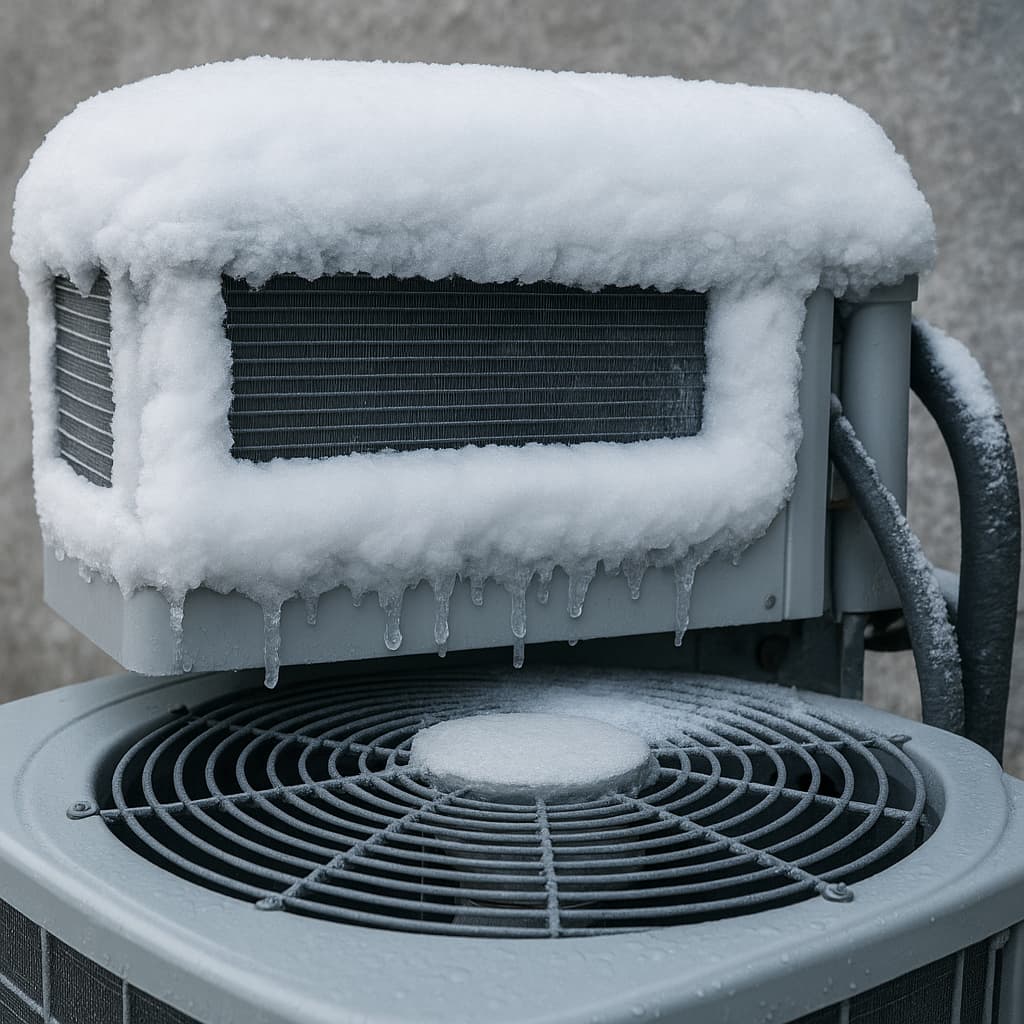
Ice anywhere on your AC system signals problems that damage your compressor if you keep running the equipment. That ice forms for specific reasons – reasons that require professional diagnosis and repair, not DIY attempts.
Low refrigerant is the most common cause. When refrigerant levels drop, the remaining refrigerant expands more than it should, dropping temperatures below freezing on your evaporator coil. Ice forms on the coil, then migrates to refrigerant lines, then builds up until it blocks airflow completely. Your system runs constantly trying to cool your home, but ice prevents air from flowing over the coil where cooling actually happens.
Fixing this requires finding the refrigerant leak – which often isn’t visible. Bellows technicians use electronic leak detectors, UV dye, and pressure testing to locate leaks in refrigerant lines, coil connections, and compressor fittings. They then repair the leak, evacuate the system with vacuum pumps that remove moisture and air, and recharge it with the precise amount of refrigerant your system requires.
This process requires EPA certification – federal law prohibits handling refrigerant without it. The certification exists because refrigerant is hazardous, because improper handling damages equipment and environment, and because proper refrigerant service demands specialized knowledge and equipment. You can’t buy refrigerant without certification. You shouldn’t attempt refrigerant repairs even if you could.
Airflow restriction causes ice formation too. A severely clogged filter, blocked return vents, or failing blower motor can reduce airflow enough that your evaporator coil temperature drops below freezing even with correct refrigerant charge. Diagnosing this requires measuring airflow, checking static pressures, and testing blower motor performance – then determining whether airflow problems result from simple restrictions or failing components.
Ice problems compound quickly. While ice blocks your coil, your compressor keeps running, trying to move refrigerant through a system that can’t absorb heat properly. This damages the compressor through liquid slugging: liquid refrigerant enters the compressor instead of vapor, which compresses poorly and hammers internal components. Compressor replacement is extremely expensive. The original ice problem might have been far more affordable if diagnosed and repaired immediately.
Never run your AC with ice visible on any component. Turn the system off, set your thermostat to fan-only mode to help melting, and call for professional service. The underlying cause – whether refrigerant loss or airflow restriction – requires diagnosis and repair you can’t safely or legally perform yourself.
Electrical Problems That Create Fire Hazards and Equipment Damage
Electrical issues with AC systems range from simple tripped breakers to dangerous shorts that create fire hazards. The complexity comes from the high voltages involved, the multiple electrical components in your system, and the interaction between electrical problems and mechanical failures that can disguise the root cause.
Your AC uses 240-volt power for the compressor and condenser fan, plus 24-volt control circuits for the thermostat, contactors, and safety switches. Problems in either system can prevent your AC from running – but only proper testing reveals which system has failed and which specific component needs replacement.
A tripped breaker might indicate a legitimate electrical overload requiring panel upgrades. Or it could signal a failing compressor drawing excessive current. Or a shorted wire. Or a failed capacitor. Or a seized fan motor. Each cause requires different repairs. Resetting the breaker without diagnosis just delays the inevitable failure and risks fire if the underlying cause involves damaged wiring or short circuits.
Bellows technicians test electrical systems with multimeters that measure voltage, amperage, and resistance across components. They check voltage at your disconnect box, at your contactor, at your compressor, at your fan motor – verifying power reaches each component and each component draws correct amperage under load. These measurements identify failing capacitors before they damage compressors, catch loose connections before they cause fires, and reveal undersized electrical service before it becomes a safety hazard.
Capacitors are common failure points that create dangerous situations. These components store electrical charge that helps start your compressor and keeps your fan motors running efficiently. When they fail, your compressor tries to start without adequate starting current, causing it to overheat and potentially burn out. A failed capacitor is relatively inexpensive to replace. The compressor it damages is one of the most expensive repairs you can face.
Capacitors also hold dangerous voltage even after you’ve shut off power to your AC. Homeowners attempting electrical repairs get shocked by capacitors they assumed were safe because the circuit breaker was off. Professional technicians discharge capacitors safely using insulated tools and proper procedures.
Contactors are heavy-duty electrical switches that engage your compressor and condenser fan. When they fail, you hear clicking from your outdoor unit but nothing happens. Failed contactors aren’t expensive parts – but diagnosing them requires testing voltage on both sides of the contactor to verify whether the problem is the contactor itself, the control circuit sending signals to it, or the compressor that won’t run even with a functioning contactor.
Wiring problems in Bay Area homes often stem from corrosion at connection points. Salt air corrodes terminals, creating resistance that generates heat. Overheated connections burn wire insulation, which eventually causes shorts or connection failures. Identifying corroded connections requires inspecting every junction box, every terminal strip, every wire nut in the system – work that takes time and requires turning off power safely while testing.
Some electrical problems indicate mechanical failures. A compressor on the verge of seizure draws excessive current trying to start, which trips your breaker. The electrical system is protecting itself from damage – the problem is mechanical (failed compressor) not electrical. Only load testing under actual operating conditions reveals these situations. Replacing electrical components when the mechanical part is failing wastes money and doesn’t fix the real problem.
Older Bay Area homes face additional electrical challenges. Houses built before widespread AC adoption might have undersized electrical panels or circuits rated for lower loads than modern AC systems require. Adding central AC to these homes without upgrading electrical service creates chronic problems – breakers that trip on hot days when the AC runs continuously, voltage drops that reduce efficiency, and fire hazards from circuits carrying more current than their wiring was designed to handle.
Never attempt electrical repairs on AC systems yourself. The high voltages can kill you. The complexity requires specialized testing equipment. Misdiagnosis leads to replacing components that aren’t actually broken. Improper repairs create fire hazards and void equipment warranties. Professional electrical service protects your safety, identifies the actual problem, and fixes it correctly the first time.
Drainage Issues That Cause Thousands in Water Damage
Water leaking from your indoor AC unit signals drainage problems that range from simple clogs you might clear yourself to serious issues requiring professional repair and water damage remediation. The challenge is identifying which situation you’re facing before water damages your home.
Your AC creates condensation – gallons of it during Bay Area summers when humidity is high and your system runs frequently. That water collects in a drain pan under your evaporator coil, then flows through a drain line to your plumbing system or outside your home. When any part of this system fails, water overflows into your home instead of draining safely away.
Simple drain clogs develop from algae growth in drain lines. Algae thrives in the dark, moist environment of condensate lines and gradually blocks flow. You might clear these clogs yourself using a wet-dry vacuum on the exterior drain opening or by pouring water mixed with condensate drain tablets through the access port near your air handler.
But drainage problems often indicate bigger issues. A drain line that clogs repeatedly despite cleaning suggests your system produces more condensation than the drain line can handle. This happens in coastal Bay Area homes where marine air creates higher humidity levels than AC systems designed for drier climates anticipate. The solution isn’t repeatedly clearing clogs – it’s installing a larger drain line or adding a condensate pump that actively removes water rather than relying on gravity drainage.
Cracked or rusted drain pans can’t be cleared with a vacuum. The pan itself needs replacement – work that requires accessing components inside your air handler, removing the evaporator coil assembly, installing a new pan, and reassembling everything with proper sealing to prevent air leaks. This isn’t DIY work. It requires understanding how air handlers are assembled, having proper replacement parts, and ensuring the system operates correctly after reassembly.
Frozen coils create drainage overload. When your evaporator coil freezes due to low refrigerant or restricted airflow, ice accumulates on the coil. When that ice melts – either because you’ve turned off the AC or because the system cycles off – gallons of water pour into your drain pan at once. Normal drainage can’t handle this sudden volume. Water overflows even though your drain line isn’t clogged.
This situation requires fixing the underlying cause of ice formation, not just addressing the drainage overflow. Professional diagnosis determines whether you’re dealing with refrigerant loss, airflow restriction, or thermostat problems causing the coil to freeze. Clear the drain all you want – you’ll keep getting overflows until you fix the reason ice keeps forming.
Float switches add another complication. These safety devices shut off your AC when water rises above safe levels in the drain pan, preventing overflow that damages your home. When your AC won’t turn on and you see water in the pan, the float switch is doing its job. Some homeowners bypass these switches to get their AC running – terrible idea that removes the protection system designed to prevent water damage.
Bellows technicians diagnose drainage problems by examining the entire condensate system – not just clearing visible clogs. They inspect drain pans for cracks and rust. They test drain line slope to verify gravity drainage works correctly. They check for proper trap installation that prevents sewer gases from entering your home through the condensate line. They evaluate whether your drainage system has adequate capacity for the condensation your system produces.
They also investigate why drainage problems developed in the first place. Recurring clogs suggest algae prevention measures aren’t working or drain lines need enlarging. Overflow despite clear drains points to frozen coils or cracked pans. Water pooling in places other than the drain pan indicates disconnected lines or failed seals between duct sections.
Coastal Bay Area properties face accelerated drainage system deterioration. Metal drain pans rust faster near the ocean. PVC drain lines become brittle from UV exposure in attic installations. Condensate pumps fail sooner when they handle higher water volumes from marine humidity. Professional inspection identifies these issues before they cause water damage requiring repairs that cost far more than drainage system maintenance.
Water damage from AC drainage failures is extremely expensive to remediate. Drywall replacement, floor repairs, mold remediation, and ceiling damage can exceed the expense of a new AC system. Prevention through professional drainage service and addressing problems at first signs of overflow is far more affordable than water damage repair.
Never ignore water around your AC components. Don’t bypass float switches or safety shutoffs. Don’t assume repeated clogs are normal. Get professional diagnosis that identifies root causes and prevents the water damage that turns a minor repair into a major renovation project.
Get Professional AC Service Before Your System Fails Completely
You’ve read about the complexity behind simple symptoms. You understand why proper diagnosis requires specialized equipment and expertise. You recognize how attempting your own repairs risks equipment damage, personal injury, and voided warranties. Now the question becomes whether you’ll call for professional service at the first warning signs or wait until your system fails completely during the hottest week of summer.
That timing decision affects everything – the repair costs you’ll pay, the comfort you’ll maintain in your home, the stress you’ll experience scrambling for emergency service when every HVAC company’s schedule is packed solid. Professional service now, when you first notice problems, prevents the emergency service call later when you desperately need cooling but have to wait days for an available technician.
Consider what professional AC diagnosis actually provides. Bellows Plumbing, Heating, Cooling & Electrical technicians arrive with equipment designed specifically for AC troubleshooting – refrigerant gauges that measure exact pressures, multimeters that test electrical systems safely, airflow meters that quantify what you only feel at your vents, thermal imaging that reveals problems invisible to the eye. These tools identify root causes, not just obvious symptoms.
They test your entire system systematically. They verify refrigerant charge and check for leaks. They measure electrical voltage, amperage, and capacitance on every motor and component. They inspect mechanical parts for wear. They evaluate ductwork for restrictions and leaks. They assess whether your system is properly sized for your home and climate. This thorough approach finds problems you didn’t know existed, problems that would have caused expensive failures if left unaddressed.
Experience matters as much as equipment. Technicians who service AC systems throughout the Bay Area recognize patterns specific to our climate and housing stock. They know how marine air corrodes components in Santa Cruz and San Francisco. They understand how temperature swings between fog and heat stress systems in Sonoma and Marin. They’re familiar with undersized ductwork common in older San Jose homes that were retrofit with central AC. This local knowledge identifies problems and solutions that generic troubleshooting misses.
Professional service protects your investment through warranty-compliant repairs using proper parts and procedures. Manufacturers require professional installation and maintenance to honor equipment warranties. DIY repairs void these warranties, meaning when your attempt causes additional damage, you pay full replacement expense for components that would have been covered. Professional service maintains warranty protection that can save you substantial amounts if major components fail.
The repairs themselves get done right the first time. Refrigerant service includes leak detection, proper evacuation, and precise charging – not just adding refrigerant and hoping the leak is minor. Electrical repairs use correct wire sizing, proper torque on connections, and components rated for your system’s requirements. Mechanical work includes OEM parts designed for your specific equipment, not universal parts that might fit but won’t last.
You also get explanations that help you make informed decisions. When Bellows technicians identify problems, they explain what’s wrong, why it happened, what repair options you have, and what outcomes you can expect from each option. They tell you honestly when a system is worth repairing versus when age and efficiency make replacement the smarter investment. This transparency helps you plan properly rather than being surprised by escalating repair costs on equipment that’s approaching end of life anyway.
Bay Area homeowners need HVAC companies familiar with regional requirements and challenges. Building codes vary by county. Seismic requirements affect installation methods. Local utility rebate programs change frequently. Permit requirements differ between jurisdictions. Companies that specialize in Bay Area service handle these complexities efficiently, getting permits properly, qualifying you for available rebates, meeting code requirements that protect your home’s value.
Response time matters during AC failures. Summer heat waves put enormous demand on HVAC service companies. Emergency calls during peak season mean waiting days for available technicians. Regular customers who maintain their systems and call for service at first warning signs get prioritized scheduling. Building a relationship with a reliable HVAC company through maintenance and timely service calls means you get faster response when you need emergency repair.
Your AC system isn’t a luxury in Bay Area summers. It’s protection from heat waves that make homes unlivable without cooling. It’s filtration that keeps indoor air breathable when wildfire smoke forces you to close all windows. It’s humidity control that prevents mold and protects your home’s structure. That system deserves professional maintenance and repair that keeps it running reliably when you need it most.
The AC problems you’re experiencing right now will get worse. Refrigerant leaks enlarge. Components under stress fail faster. Electrical problems progress from minor issues to fire hazards. Drainage problems cause water damage. Waiting doesn’t save money – it increases the eventual repair bill and risks complete system failure when replacement parts are scarce and technicians are booked solid.
Bellows Plumbing, Heating, Cooling & Electrical serves homeowners throughout Santa Cruz, San Jose, Marin, San Francisco, Sonoma, and Santa Clara counties with the expertise Bay Area AC systems require. Our technicians diagnose problems accurately, explain your options clearly, and repair systems correctly – so your home stays comfortable and your AC keeps running reliably. Don’t wait for complete system failure during a heat wave. Call now for professional diagnosis and repair that fixes problems before they become emergencies.
AC Problems in The Bay Area: Frequently Asked Questions
What are the early warning signs of AC problems in Bay Area homes?
Common early signs include weak airflow, grinding or squealing noises, ice forming on coils or refrigerant lines, water leaks, and tripped breakers. These symptoms usually indicate deeper mechanical or electrical issues that require professional diagnosis.
Why do AC problems get worse so quickly in Bay Area climates?
Marine air, coastal humidity, salt corrosion, and rapid temperature swings accelerate wear on AC components. These conditions create faster refrigerant leaks, corrosion, airflow issues, and electrical failures—turning small problems into expensive breakdowns.
Can I fix AC problems myself, like adding refrigerant or clearing blockages?
No. Refrigerant handling requires EPA certification, and DIY attempts often introduce moisture or air into the system, causing compressor damage. Electrical components also store dangerous voltage. Professional diagnosis prevents injury and equipment failure.
Why does ice forming on my AC system require immediate service?
Ice indicates restricted airflow or low refrigerant—both of which can cause severe compressor damage if the system continues running. Ice also leads to drainage overflow and water damage. You should shut the system off and schedule service immediately.
What causes water leaks from my indoor AC unit?
Leaks often result from clogged drain lines, cracked drain pans, or frozen evaporator coils that release large amounts of melting ice. In humid Bay Area environments, these issues escalate quickly and may cause structural water damage.
When should I call a professional for AC problems?
Any grinding noises, ice buildup, weak airflow, repeated breaker trips, burning smells, or water around the unit signal immediate need for professional diagnosis. Early service prevents emergencies and extends system lifespan.