
Sewer line repair costs in the Bay Area typically range from $1,400 to $5,300, with most homeowners paying around $3,300 for professional service. The final price depends on several factors including repair method, pipe material, line length, and accessibility. Understanding these cost drivers helps you budget effectively and avoid surprises when addressing this critical home infrastructure issue.
Understanding Sewer Line Repair Costs
Your sewer line carries all wastewater from your home to the municipal system, making it one of your property’s most essential components. When problems arise, repair costs vary significantly based on the scope of work required.
For minor repairs like clearing simple clogs, expect to pay $150 to $500. More extensive work involving pipe replacement can cost $50 to $250 per linear foot. The average homeowner faces a bill between $1,400 and $5,300, though complex projects sometimes exceed $10,000.
Most plumbing contractors charge either hourly rates ($150 to $500 per hour) or per-foot pricing for sewer work. Per-foot pricing typically provides more predictable costs once the scope is determined through camera inspection.
What Factors Influence Sewer Line Repair Pricing
Several key variables determine your final repair bill. Understanding these factors helps you anticipate costs and ask informed questions when obtaining estimates.
- Line Length and Depth: Longer pipes require more materials and labor, directly impacting costs. Pipes buried 4 to 8 feet deep in colder climates cost more to access than shallow lines in warmer regions. According to the Environmental Protection Agency, proper depth placement protects against freezing and ground shifting.
- Pipe Material: The existing pipe material significantly affects repair complexity and cost. PVC pipes ($3 to $11 per linear foot) are the most economical to repair. Cast iron pipes, common in older homes, cost $1,200 for every 50 linear feet of replacement. If you’re dealing with older galvanized pipes, consider reading our guide on galvanized pipe repair and replacement. ABS plastic falls in the middle range at $3 to $11 per foot, though some states restrict its use.
- Accessibility: Sewer lines under concrete slabs cost substantially more to repair—$300 to $350 per linear foot—due to the additional work of breaking through concrete. If you suspect slab leaks, immediate inspection becomes critical. Lines beneath landscaping or lawns are more accessible and therefore less expensive to reach.
- Extent of Damage: A single crack may require only spot repair, while collapsed pipes or extensive root intrusion necessitate full replacement. The severity of damage directly correlates with labor hours and material needs.
Excavation vs. Trenchless Repair Methods
Modern sewer repair offers two primary approaches, each with distinct cost profiles and benefits.
- Traditional Excavation: This method involves digging trenches to access damaged pipes. Excavation costs $50 to $200 per linear foot and requires restoring landscaping afterward. While labor-intensive, traditional excavation works well for severely damaged lines or when extensive inspection is needed. Yard restoration adds $4.50 to $12 per square foot for landscaping or $2 to $25 per square foot for concrete repair.
- Trenchless Technology: This minimally invasive approach costs $60 to $250 per linear foot but eliminates extensive digging. Learn more about trenchless repair technology and its benefits. Two main trenchless methods exist:
- Pipe bursting forces new piping through the existing damaged pipe, replacing it in place. This method costs $60 to $200 per linear foot.
- Cured-in-place pipe lining (CIPP) coats the interior of damaged pipes with epoxy resin, creating a new pipe within the old one. CIPP costs $90 to $250 per linear foot.
While trenchless methods carry higher upfront costs, they preserve your landscaping and often complete repairs faster. For Bay Area homeowners with established gardens or expensive hardscaping, trenchless approaches frequently prove more cost-effective overall.
| Repair Method | Cost Per Linear Foot | Typical Timeline | Property Disruption |
|---|---|---|---|
| Traditional Excavation | $50 – $200 | 2-5 days | High (trenches, restoration needed) |
| Pipe Bursting | $60 – $200 | 1-3 days | Minimal (small access points) |
| CIPP Lining | $90 – $250 | 1-2 days | Minimal (no digging required) |
| Spot Repair | $150 – $500 (total) | 4-8 hours | Minimal to moderate |
Camera Inspection: Why It’s Essential
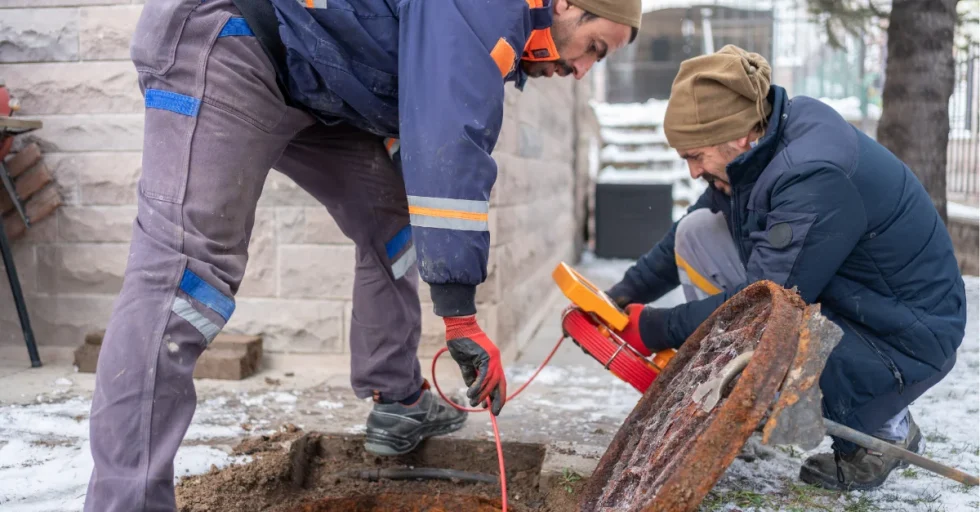
Professional sewer camera inspections cost $100 to $500 but provide invaluable diagnostic information that prevents costly mistakes. This technology allows plumbers to identify the exact location and nature of problems without excavating your entire yard.
The camera reveals clogs, cracks, root intrusions, and pipe condition. This precision enables targeted repairs rather than guesswork, potentially saving thousands in unnecessary work. Most reputable contractors include camera inspection in their standard diagnostic process.
Skipping this step risks misdiagnosis and incomplete repairs. What appears as a simple clog might actually indicate pipe collapse requiring replacement. The modest inspection cost pays for itself by ensuring accurate treatment the first time.
Hidden Costs You Should Budget For
Beyond the core repair work, several additional expenses often surprise homeowners. Planning for these costs prevents budget overruns.
- Permits and Inspections: Many municipalities require permits for sewer work, especially when accessing public right-of-way. Permit costs range from $400 to $1,600 depending on your location and project scope. Santa Clara County, for instance, mandates inspections for any work connecting to municipal systems. Learn more about why pulling permits matters for your project.
- Landscaping Restoration: Even with careful excavation, repairs damage surrounding areas. Sod installation costs $1 to $2 per square foot. More extensive landscaping repairs run $4.50 to $12 per square foot. If repairs require accessing areas under driveways or patios, concrete work adds $2 to $25 per square foot.
- Tree Root Removal: Aggressive tree roots frequently cause sewer line damage. Removing root intrusions costs $100 to $600 depending on severity. In some cases, removing the offending tree becomes necessary, adding $150 to $2,000 to your total expenses. If you’re experiencing recurring blockages, read our article on what causes sewer blockages.
- Post-Repair Cleanup: Sewage backups create contamination requiring professional remediation. Backup cleanup costs $500 to $2,000 for minor incidents but can escalate with extensive contamination.
How to Know When Repair vs. Replacement Makes Sense
Not every sewer problem requires full line replacement. Understanding when each approach makes sense saves money while ensuring long-term reliability.
- Choose Spot Repair When: You have isolated damage in a specific section, your pipes are modern materials like PVC in good overall condition, and camera inspection shows no additional concerns. Spot repairs address single cracks or blockages efficiently without replacing functional pipe sections.
- Choose Full Replacement When: Your pipes are outdated materials like Orangeburg or clay (30 to 60 year lifespan), you experience frequent recurring clogs despite repairs, camera inspection reveals multiple problem areas, or your line has collapsed or severely deteriorated. For comprehensive solutions, explore our sewer line repair and replacement services.
According to the American Public Works Association, sewer lines typically last 50 to 100 years depending on material and maintenance. PVC, cast iron, and copper lines reach the upper end of this range with proper care, while older materials fail sooner.
For homes over 40 years old with original sewer lines, replacement often proves more cost-effective than repeated repairs. The initial investment eliminates ongoing repair cycles and provides decades of reliable service. If you’re considering a complete overhaul, our pipe replacement guide offers detailed information.
Regional Cost Variations in the Bay Area
Labor rates and permit requirements vary significantly across Bay Area counties, directly affecting your final bill. Where you live in the region can add or subtract hundreds—sometimes thousands—from your total project cost.
| County | Cost vs. State Average | Key Cost Factors |
|---|---|---|
| Santa Clara (San Jose) | +10% to +15% | Mandatory permits, strict compliance, elevated labor rates |
| Santa Cruz | +5% to +10% | Coastal soil conditions, environmental protections, moderate permits |
| Marin & Sonoma | +15% to +20% | Limited contractor availability, premium market pricing |
| Urban Core Areas | Variable | Older infrastructure may require extensive municipal connection work |
| Suburban Areas | At or below average | Modern systems, easier access, straightforward repairs |
Whether you’re in San Jose, Santa Cruz, Marin County, or Sonoma, homeowners in premium areas should obtain at least three written estimates to ensure competitive pricing. The differences between contractors can be substantial, especially in counties with limited competition.
Warning Signs You Need Sewer Line Repair
Early detection saves thousands in repair costs. Your home communicates sewer problems through clear warning signs that shouldn’t be ignored.
| Warning Sign | What It Means | Urgency Level |
|---|---|---|
| Multiple slow drains | Main line blockage affecting entire system | High – Schedule inspection within days |
| Sewage backups | Serious blockage or line collapse | Emergency – Call immediately |
| Persistent foul odors | Cracks allowing sewer gas escape | High – Health and safety concern |
| Unusually green yard patches | Underground leak fertilizing soil | Moderate – Inspect within 1-2 weeks |
| Soggy areas or indentations | Leaking line causing soil settlement | Moderate – Schedule inspection soon |
| Gurgling drain sounds | Air pockets from blockages or venting issues | Moderate – Monitor and inspect if persistent |
When multiple symptoms appear simultaneously, the situation typically requires immediate professional attention. If you notice sewage smell in your bathroom or experience a sewer gas smell throughout your house, don’t wait for sewage backups to force your hand—proactive inspection prevents the worst-case scenarios. For urgent situations, our emergency plumbing services are available 24/7.
Preventative Maintenance to Avoid Costly Repairs
Smart homeowners invest in prevention rather than emergency repairs. A few hundred dollars in regular maintenance prevents thousands in crisis intervention. Here’s your preventative maintenance roadmap based on your home’s age:
Homes Under 20 Years Old:
- Camera inspection every 5 years
- Watch for warning signs between inspections
- Practice proper disposal (no wipes, grease, or non-biodegradables)
- Monitor tree growth near sewer lines
Homes 20-40 Years Old:
- Camera inspection every 2-3 years
- Consider hydro jetting every 3-5 years ($350-$600) to prevent stubborn clogs
- Maintain at least 10 feet distance between trees and sewer line
- Monitor for slow drains or unusual odors
- Keep records of all inspections and repairs
Homes Over 40 Years Old:
- Annual camera inspections recommended
- Hydro jetting every 2-3 years
- Budget for potential replacement within 5-10 years
- Document pipe material and condition for insurance
- Consider sewer line insurance endorsement
- If you have older pipes, read about repiping options for your home
The single most effective prevention strategy? Keep trees at least 10 feet from your sewer line. Root intrusion causes more damage than any other factor, yet it’s completely avoidable through smart landscaping decisions. If you’re already experiencing drain issues, learn how to unclog a drain or when to call professionals.
Insurance Coverage Considerations
Here’s the reality most homeowners don’t expect: standard homeowners insurance policies typically exclude sewer line repairs. Insurers classify these as maintenance issues resulting from normal wear, making coverage rare. However, understanding the exceptions can save you thousands.
| Coverage Category | Examples | Typical Coverage |
|---|---|---|
| Usually NOT Covered | Gradual deterioration, root intrusion from lack of maintenance, clogs from improper use, age-related failure | Excluded from standard policies |
| Sometimes Covered | Sudden accidental damage (vehicle impact), falling tree on exposed pipe, vandalism | Review your policy’s specific perils |
| Optional Add-On Coverage | Sewer line endorsements, service line coverage | $50-$250 annually, covers $10,000-$50,000 |
| Interior Backup Damage | Water damage to home from sewer backup | Often covered separately from line repair |
For homes over 40 years old with original plumbing, sewer line endorsements often make financial sense. The annual premium equals roughly one emergency service call, yet covers potential five-figure repairs. Before starting any repair work, document everything thoroughly with photos and videos. If you believe your situation might qualify for coverage, contact your insurance agent before authorizing repairs—post-repair claims face significant hurdles without pre-approval.
Get Professional Sewer Line Repair
Sewer line repairs require specialized equipment and expertise. Our licensed technicians provide comprehensive plumbing and drain services throughout the Bay Area with transparent estimates and quality workmanship.
Whether you need residential plumbing services, commercial plumbing, or general plumbing repairs, we’re here to help.
Don’t wait for a small problem to become a costly emergency.